Chariot racing
Videos
Chariot racing was one of the most popular ancient Greek, Roman, and Byzantine sports. In Greece, chariot racing played an essential role in aristocratic funeral games from a very early time. With the

Modern depiction (1876) by Jean Léon Gérôme of a chariot race in Rome's Circus Maximus, as if seen from the starting gate. The Palatine Hill and imperial palace are to the left.

Chariot racing on a black-figure hydria from Attica, ca. 510 BC

The Charioteer of Delphi, an anonymous charioteer who probably drove in the Pythian Games for Polyzalus, tyrant of Gela, in Sicily (480–470BC)

1st century relief of a racing biga beneath dolphin-shaped lap counters; ceramic, 1st century. The lettering is an artisan's mark.
The demes were chariot racing factions in the Roman and later Byzantine Empires, which over time developed into social and political factions. There were four demes; the dominant two were the Blues an
Chariot racing
…and senior officials. The annually appointed consuls were obliged to personally fund their own inaugural games. Members of racing factions (known as demes), were a minority among chariot racing enthusiasts as a whole. In Byzantium as elsewhere, racing fans cheered on their favorite charioteers, and sought…

A winner of a chariot race, from the Greens

Mosaic from Lyon illustrating a chariot race with the four factions: Blue, Green, Red and White

Kom El Deka in Alexandria. 6th-century graffiti on the seats shows support for the Blues and Greens.
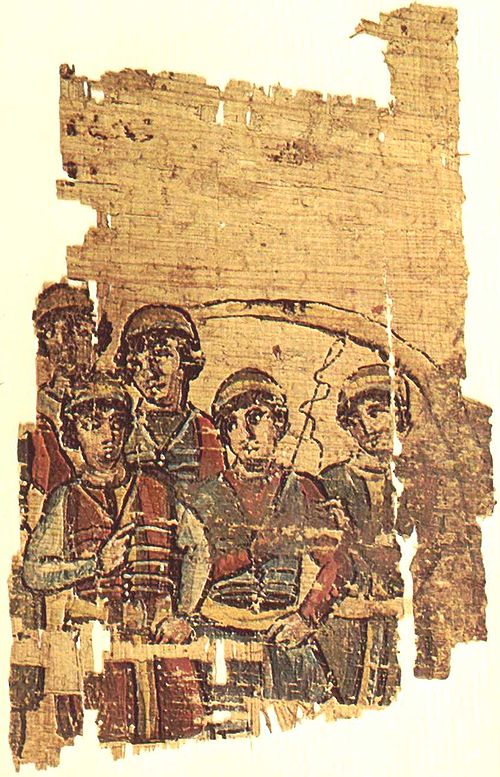
Charioteers in the red tunics of their faction from the Charioteer Papyrus (c. 500)