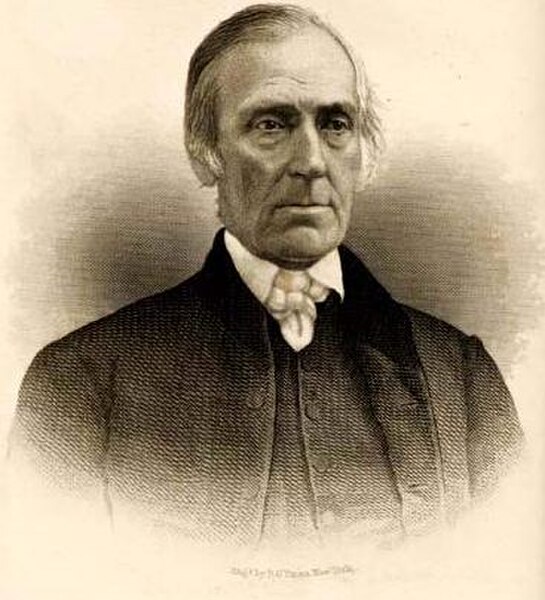
Charles Turner Torrey was a leading American abolitionist. Although largely lost to historians until recently, Torrey pushed the abolitionist movement to more political and aggressive strategies, including setting up one of the first highly organized lines for the Underground Railroad and personally freeing approximately 400 slaves. Torrey also worked closely with free blacks, thus becoming one of the first to consider them partners. John Brown cited Torrey as one of the three abolitionists he looked to as models for his own efforts.
A sketch of Torrey, c. 1840, from Memoir of Rev. Charles T. Torrey, Joseph P. Lovejoy, ed. (Boston: John P. Jewett & Co.), 1847
Monument for Charles Turner Torrey by sculptor Joseph Carew at Mount Auburn Cemetery
The Underground Railroad was a network of secret routes and safe houses established in the United States during the early to mid-19th century. It was used by enslaved African Americans primarily to escape into free states and from there to Canada. The network, primarily the work of free African Americans, was assisted by abolitionists and others sympathetic to the cause of the escapees. The slaves who risked capture and those who aided them are also collectively referred to as the passengers and conductors of the Railroad, respectively. Various other routes led to Mexico, where slavery had been abolished, and to islands in the Caribbean that were not part of the slave trade. An earlier escape route running south toward Florida, then a Spanish possession, existed from the late 17th century until approximately 1790. However, the network generally known as the Underground Railroad began in the late 18th century. It ran north and grew steadily until the Emancipation Proclamation was signed by President Abraham Lincoln. One estimate suggests that, by 1850, approximately 100,000 slaves had escaped to freedom via the network.

Harriet Tubman (photo H. B. Lindsley), c. 1870. A worker on the Underground Railroad, Tubman made 13 trips to the South, helping to free over 70 people. She led people to the Northern free states and Canada. This helped Harriet Tubman gain the name "Moses of Her People".
Quaker abolitionist Levi Coffin and his wife Catherine helped more than 2,000 enslaved people escape to freedom.
International Underground Railroad Memorial in Windsor, Ontario
John Brown participated in the Underground Railroad as an abolitionist.