Charters of Freedom
Videos
The term Charters of Freedom is used to describe the three documents in early United States history which are considered instrumental to its founding and philosophy. The documents are the United State
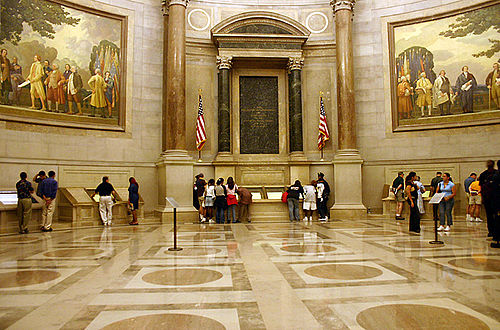
The Rotunda for the Charters of Freedom in the National Archives Building in Washington, D.C. where, between two Barry Faulkner murals, the original United States Declaration of Independence, United States Constitution, and other American founding documents are exhibited

Librarian of Congress Herbert Putnam at the opening of the Charters of Freedom Shrine on February 28, 1924

Langley Research Center researcher James West looks for the first signs of water vapor condensation in the encasement of the U.S. Constitution in April 2008.

The mini-cooler used to determine the relative humidity of the atmosphere in the encasement of the U.S. Constitution
United States Bill of Rights
Videos
The United States Bill of Rights comprises the first ten amendments to the United States Constitution. It was proposed following the often bitter 1787–88 debate over the ratification of the Constituti
Charters of Freedom
…are considered instrumental to its founding and philosophy. The documents are the United States Declaration of Independence, the Constitution, and the Bill of Rights. While the term has not entered particularly common usage, the room at the National Archives Building in Washington, D.C. that houses the three documents…

First page of an original copy of the twelve proposed articles of amendment, as passed by Congress and engrossed by William Lambert

On June 5, 1788, Patrick Henry spoke before Virginia's ratification convention in opposition to the Constitution.

James Madison, primary author and chief advocate for the Bill of Rights in the First Congress

The Declaration of Independence and the Constitution on display in the Library of Congress prior to the removal to the National Archives