Children of Llullaillaco
Videos
The Children of Llullaillaco, also known as the Mummies of Llullaillaco, are three exceptionally well-preserved Inca child mummies discovered on 16 March 1999 by archaeologists Johan Reinhard, María C

La Doncella, the oldest of the three children

A view of Llullaillaco

An archaeological site at the top of Llullaillaco

La Doncella on display
Inca Empire
Videos
The Inca Empire, officially known as the Realm of the Four Parts, was the largest empire in pre-Columbian America. The administrative, political, and military center of the empire was in the city of C
Children of Llullaillaco
…The Children of Llullaillaco (Spanish: or ), also known as the Mummies of Llullaillaco, are three exceptionally well-preserved Inca child mummies discovered on 16 March 1999 by archaeologists Johan Reinhard, María Constanza Ceruti and their team near the summit of Llullaillaco, a…

Stela in Tiwanaku's Kalasasaya temple
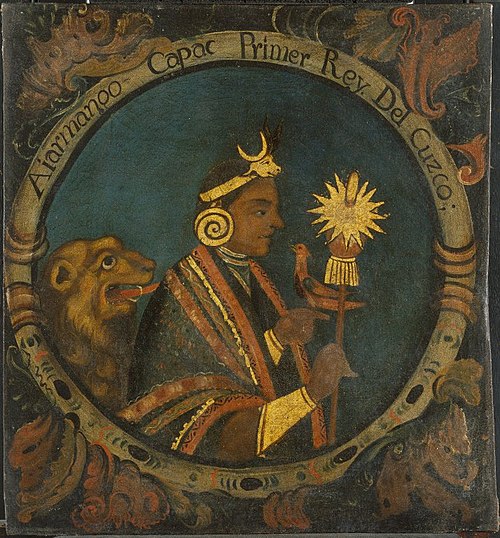
Manco Capac, First Inca, 1 of 14 Portraits of Inca Kings, Probably mid-18th century. Oil on canvas. Brooklyn Museum

The first image of the Inca in Europe, Pedro Cieza de León, Crónica del Perú, 1553

Capaccona or Qhapaqkuna "the kings", a 17th-century Cusco painting with the Inca lineages mentioned by colonial chronicles and their relationship with the royal queens of Cuzco, which hide behind a complex representation of the Inca social organization.