Chongzhen Emperor
Videos
The Chongzhen Emperor, temple name Ming Sizong, personal name Zhu Youjian, courtesy name Deyue, was the 17th and last emperor of the Ming dynasty, reigning from 1627 to 1644. He succeeded his elder br

Ming dynasty porcelain bowl, Chongzhen reign period

The Chongzhen Emperor Slays One of His Daughters, from Martino Martini's De Bello Tartarico Historia (1655)

A modern replacement of the tree from which the Chongzhen Emperor was said to have hanged himself

Cannon forged during Chongzhen's reign, 1633
Tianqi Emperor
Videos
The Tianqi Emperor, personal name Zhu Youjiao, was the 16th and penultimate emperor of the Ming dynasty of China, reigning from 1620 to 1627. He succeeded his father, the Taichang Emperor.
Chongzhen Emperor
…Zhu Youjian, courtesy name Deyue, was the 17th and last emperor of the Ming dynasty, reigning from 1627 to 1644. He succeeded his elder brother, the Tianqi Emperor. "Chongzhen", the era name of his reign, means "honorable and auspicious." Zhu Youjian was son of the Taichang Emperor. As emperor, he battled peasant…

Palace portrait on a hanging scroll
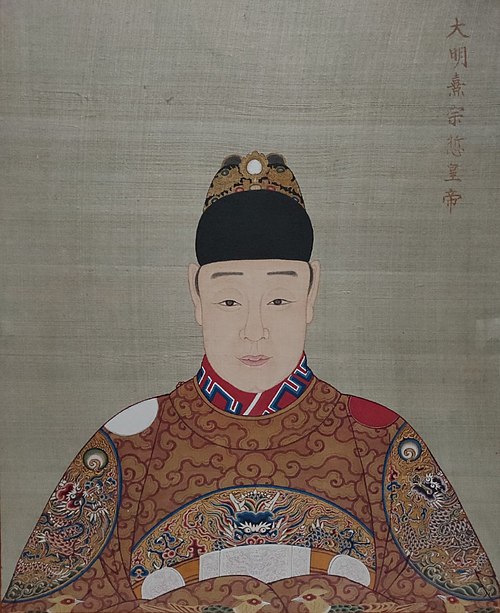
Portrait of Xizong, Emperor Zhe in The Palace Museum