Chthonic deities
Videos
In ancient Greek religion and mythology, chthonic or chthonian deities or spirits were those who inhabited the underworld or existed in or under the earth, and were typically associated with death or

A relief from grave of Lysimachides, 320 BC. Two men and two women sit together as Charon, the ferryman of the Underworld, approaches to take them to the land of the dead.

Orestes Pursued by the Furies painted by William-Adolphe Bouguereau, 1862
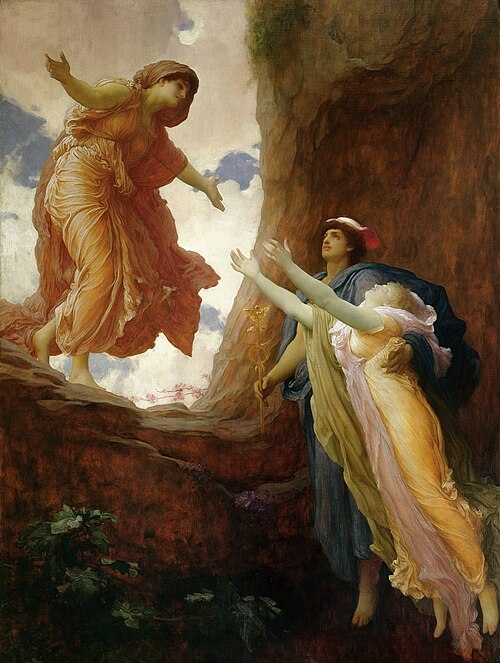
The Return of Persephone, 1891, by Frederic Leighton

Hagia Triada Sarcophagus, 1400 BC, Minoan fresco potentially depicting chthonic worship.
Persephone
Videos
In ancient Greek mythology and religion, Persephone is the daughter of Zeus and Demeter. She became the queen of the underworld after her abduction by her uncle Hades, the king of the underworld, who
Chthonic deities
…but represent a cultic spectrum. These terms communicate associations with the underworld and/or agriculture. This makes some deities such as Hades, Persephone, and the Erinyes more likely to be considered chthonic due to their proximity to the underworld. While this is the case, virtually any god could be…

Terracotta votive plaque from Eleusis, 450 BC, NAMA, 190875

Sarcophagus with the abduction of Persephone. Walters Art Museum. Baltimore, Maryland

The Rape of Proserpina by Gian Lorenzo Bernini (1621–22) at the Galleria Borghese in Rome

Hades (right) and Persephone (left). Detail from an Attic red-figure amphora, ca. 470 BC. From Italy. Louvre