Cinephilia
Videos
Cinephilia is the term used to refer to a passionate interest in films, film theory, and film criticism. The term is a portmanteau of the words cinema and philia, one of the four ancient Greek words f
The Italian director Federico Fellini, a fashionable figure in the United States during the 1960s and 1970s, owed part of his popularity to the support of film critics and the distribution of foreign films in order to accommodate the increasingly sophisticated public.


Wong Kar-wai (pictured) is a renowned arthouse film director from Hong Kong known for works such as Chungking Express (1994) and In the Mood for Love (2000).

Though his films have met with mixed commercial and critical success, American director Michael Mann (pictured above at Cinémathèque Française in 2009) is often considered to be a major figure of vulgar auteurism by contemporary cinephiles.

American director and cinephile Quentin Tarantino often makes references in his work to films and directors he admires.
French New Wave
Videos
The New Wave, also called the French New Wave, is a French art film movement that emerged in the late 1950s. The movement was characterized by its rejection of traditional filmmaking conventions, favo
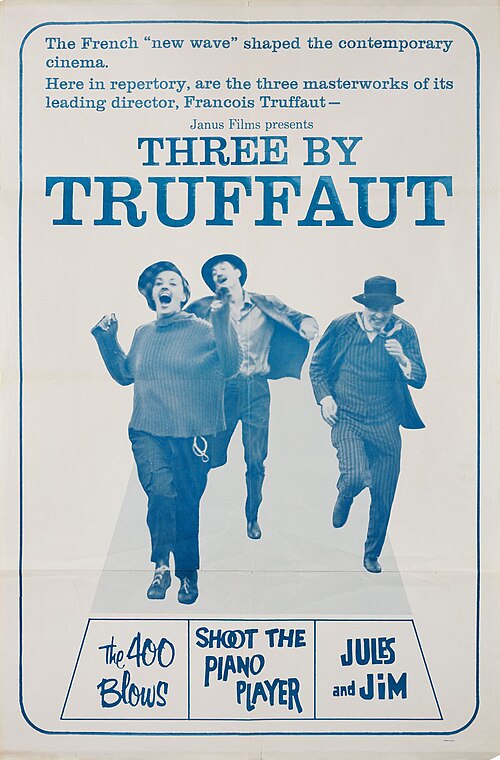
"Three by Truffaut" poster for the US re-release of French New Wave films The 400 Blows, Shoot the Piano Player and Jules and Jim.

François Truffaut in 1965

Jean-Luc Godard in 1968

Agnès Varda at the Venice Film Festival, 1962