References to an expulsion of Jews from Rome by the Roman emperor Claudius, who was in office AD 41–54, appear in the Acts of the Apostles, and in the writings of Roman historians Suetonius, Cassius D
Portrait of Claudius, Altes Museum, Berlin


The Temple of Apollo, where the Delphi Inscription was discovered in the 20th century, used to date the proconsulship of Gallio which provides a peg for the chronology of Paul.

A page from a sixth-century Paulus Orosius Histories manuscript, Florence.
Claudius
Videos
Tiberius Claudius Caesar Augustus Germanicus, or simply Claudius, was a Roman emperor, ruling from AD 41 until his death in AD 54. The fourth ruler of the Julio-Claudian dynasty, Claudius was born to
Claudius' expulsion of Jews from Rome
…References to an expulsion of Jews from Rome by the Roman emperor Claudius, who was in office AD 41–54, appear in the Acts of the Apostles (18:2), and in the writings of Roman historians Suetonius (c. AD 69 – c. AD 122), Cassius…
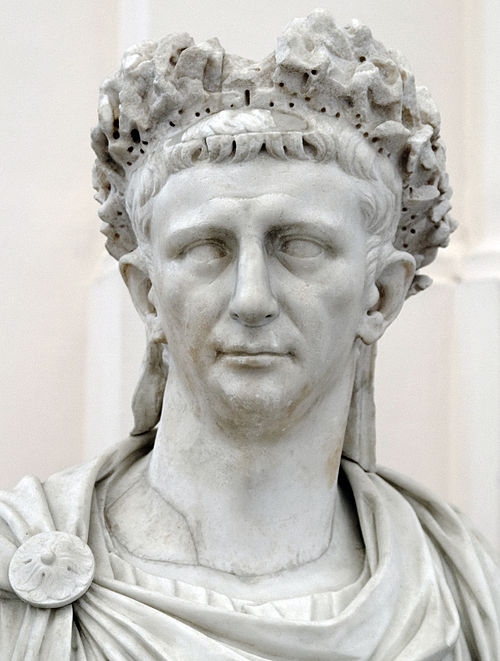
Roman marble bust of Claudius, wearing a corona civica, Naples National Archaeological Museum

A coin of Herod of Chalcis, showing him with his brother Agrippa of Judaea crowning Claudius, AD 43.

Detail from A Roman Emperor 41 AD, c. 1871.

Aureus struck at the Lugdunum (Lyon) mint, AD 41. The reverse commemorates the "reception of the emperor" (imperator receptus) at the Praetorian Camp and the protection the Praetorian Guard afforded him in the days following the assassination of Caligula. Issued over a number of years in both gold and silver, these types of coins were struck to serve as part of the annual military payments Claudius had promised the Guard in return for their role in raising him to the throne. Caption: TI. CLAVD. CAESAR AVG. P. M., TR. P. / IMPER. RECEPT.