Clio
Videos
In Greek mythology, Clio, also spelled Kleio, Cleio, or Cleo, is the muse of history, or in a few mythological accounts, the muse of lyre-playing.
Clio on an antique fresco from Pompeii


Print of Clio, made in the 16th–17th century. Preserved at the Ghent University Library.

Statue of Clio by Albert Wolff in Berlin

Clio, Muse of History by Johannes Moreelse
Muses
Videos
In ancient Greek religion and mythology, the Muses were the inspirational goddesses of literature, science, and the arts. They were considered the source of the knowledge embodied in the poetry, lyric
Clio
…In Greek mythology, Clio (traditionally , but now more frequently ; Greek: Κλειώ), also spelled Kleio, Cleio, or Cleo, is the muse of history, or in a few mythological accounts, the muse of lyre-playing. Clio's name is derived from the Greek root κλέω/κλείω (meaning "to recount…

Muse, perhaps Clio, reading a scroll (Attic red-figure lekythos, Boeotia, c. 430 BC)
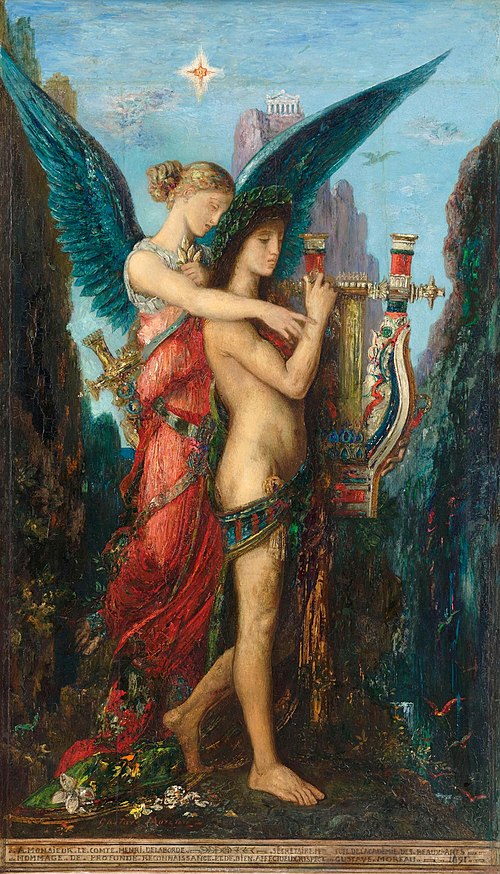
Gustave Moreau: Hesiod and the Muse (1891), Musée d'Orsay, Paris
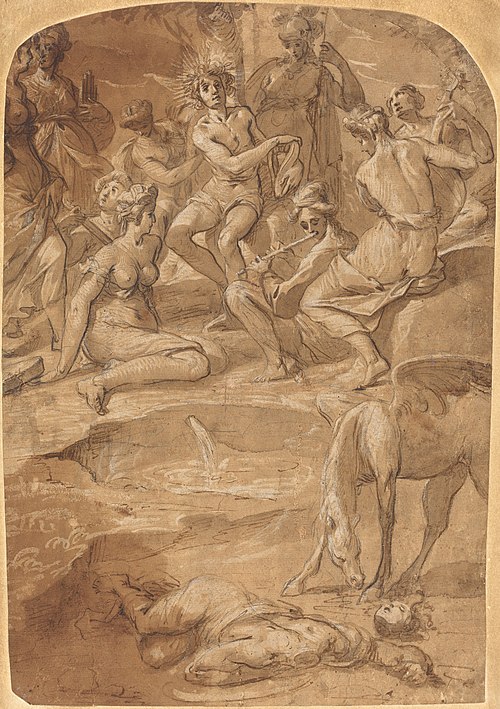
Apollo and the Muses on Mount Parnassus, c. 1650, by Johann Christoph Storer. Held at National Gallery of Art