On 6 June 1967, after the start of the Six-Day War, Egypt closed the Suez Canal, which it owned and operated, and kept it closed until 5 June 1975, through most of the Israeli occupation of the Sinai
Israeli capture of the Egyptian Sinai Peninsula, 7–8 June 1967, during the Six-Day War


President Nasser's visit to the Suez front with Egypt's top military commanders during the War of Attrition. Directly behind him is General Commander Mohamed Fawzi and to his left Chief of Staff Abdul Munim Riad, 16 November 1968.

Egypt crossing the Suez Canal during the Yom Kippur War

President Anwar Sadat and Minister of Defense Ahmed Ismail in the re-opening ceremony of the Canal, June 5, 1975
Yom Kippur War
Videos
The Yom Kippur War, also known as the 1973 Arab–Israeli War, the fourth Arab–Israeli War, the October War, or the Ramadan War, was fought between Israel and a coalition of Arab states led by Egypt and
Closure of the Suez Canal (1967–1975)
…frontiers remained the same as when the war began, with no real commitment to serious peace negotiations. On 6 October 1973, Egypt and Syria began the Yom Kippur War with an attempt to take back the entire Sinai Peninsula and the Golan Heights from the Israelis, by crossing the Suez Canal in Operation Badr. The…

Egyptian President Anwar Sadat

Upon learning of the impending attack, Prime Minister of Israel Golda Meir made the controversial decision not to launch a pre-emptive strike.
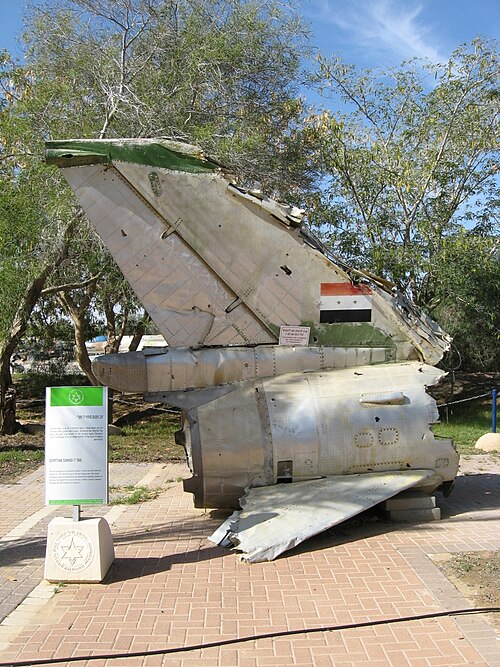
Wreckage from an Egyptian Sukhoi Su-7 shot down over the Sinai on 6 October, Israeli Air Force Museum

Egyptian forces crossing the Suez Canal