Coat of arms
Videos
A coat of arms is a heraldic visual design on an escutcheon, surcoat, or tabard, originating in Europe. The coat of arms on an escutcheon forms the central element of the full heraldic achievement, wh

Coats of Arms in the Dering Roll, an English armorial from the 13th century

Brabant Lion held by Floris de Merode during the funeral of Albert VII, Archduke of Austria, print after design by Jacob Franquart

The German Hyghalmen Roll, c. late 15th century, illustrates the German practice of thematic repetition from the arms in the crest

Coat of arms of Liptov County in Slovakia
Escutcheon (heraldry)
Videos
In heraldry, an escutcheon is a shield that forms the main or focal element in an achievement of arms. The word can be used in two related senses. In the first sense, an escutcheon is the shield upon
Coat of arms
…A coat of arms is a heraldic visual design on an escutcheon (i.e., shield), surcoat, or tabard (the last two being outer garments), originating in Europe. The coat of arms on an escutcheon forms the central…

Effigy of William Longespée the Younger (d.1250) in Salisbury Cathedral, showing an early triangular heater shield, the shape used as the "canvas" for the display of arms during the classical age of heraldry
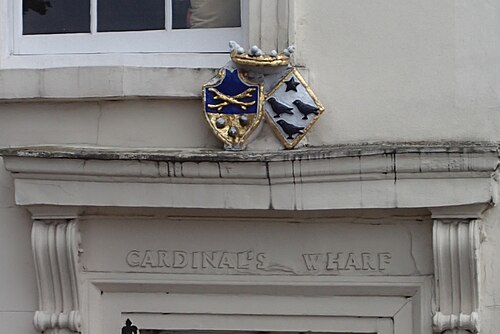
Male (shield-shaped) and female (lozenge-shaped) coats of arms in relief in Southwark, London.
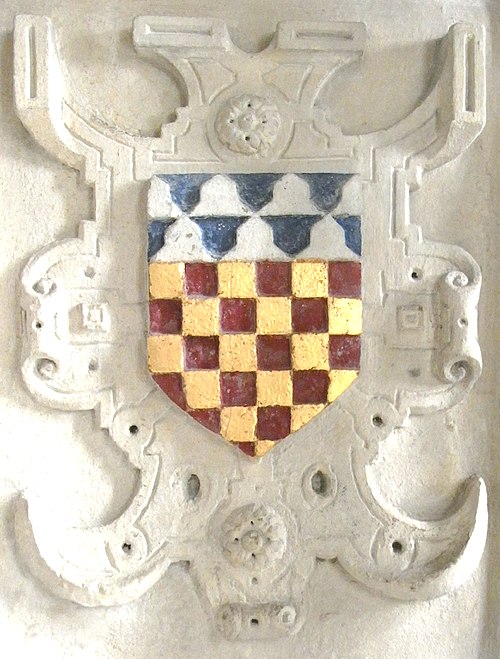
Console from Chichester tomb, Pilton, Devon, 1569