Coffin portrait
Videos
A coffin portrait was a realistic portrait of the deceased person put on coffins for the funeral and one of the elements of the castrum doloris, but removed before the burial. It became a tradition to
![Coffin portrait of Jan Gniewosz, c. 1700, oil on tin plate. Signature: I.[an] G.[niewosz] N.[a] O.[oleksowie] K.[asztelan] C.[zchowski] English: Jan G](https://upload.wikimedia.org/wikipedia/commons/thumb/7/7b/Coffin_portrait_of_Jan_Gniewosz.jpg/500px-Coffin_portrait_of_Jan_Gniewosz.jpg)
Coffin portrait of Jan Gniewosz, c. 1700, oil on tin plate. Signature: I.[an] G.[niewosz] N.[a] O.[oleksowie] K.[asztelan] C.[zchowski] English: Jan Gniewosz [lord] of Oleksów, castellan of Czchów

Coffin portraits in the National Museum in Warsaw

Coffin portraits on display at Poznań Cathedral, painters unknown.

Coffin portrait of Barbara Lubomirska, 1676.
The Polish–Lithuanian Commonwealth, also referred to as Poland–Lithuania or the First Polish Republic, was a federative real union between the Kingdom of Poland and the Grand Duchy of Lithuania, exist

The Union of Lublin joined the Kingdom of Poland and the Grand Duchy of Lithuania in 1569.
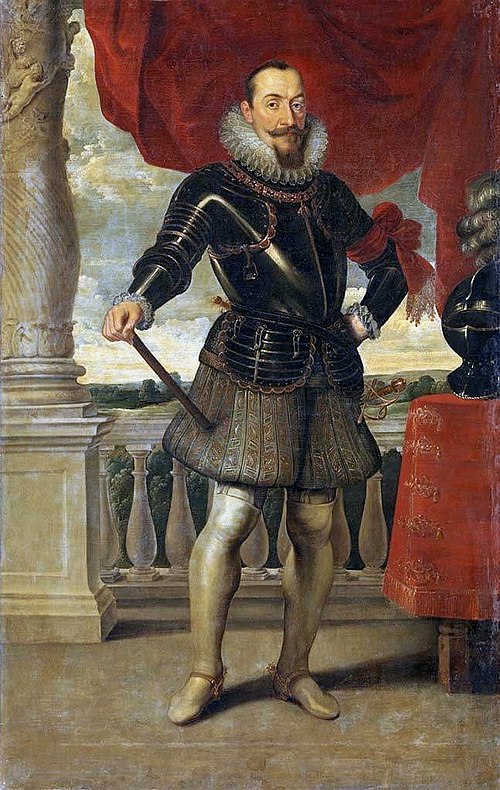
Sigismund III Vasa, who reigned between 1587 and 1632, presided over an era of prosperity and territorial expansion of the Commonwealth.

Sejm (parliament) of the Polish–Lithuanian Commonwealth in the early 17th century
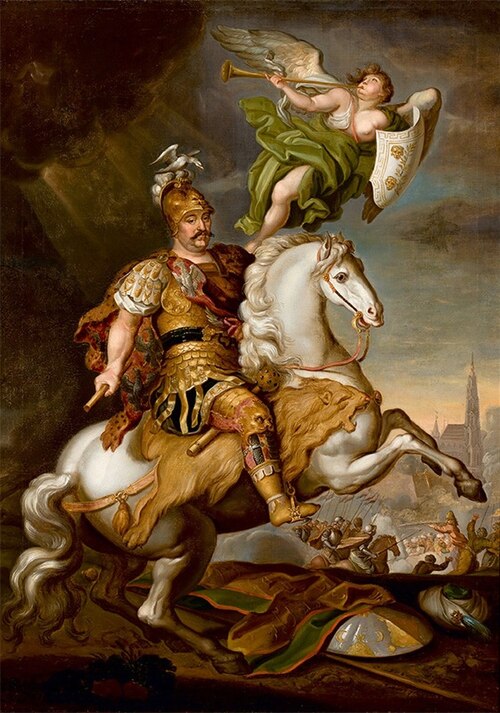
John III Sobieski, victor over the Ottoman Turks at the Battle of Vienna in 1683.