Coinage Act of 1873
Videos
The Coinage Act of 1873 or Mint Act of 1873 was a general revision of laws relating to the Mint of the United States. By ending the right of holders of silver bullion to have it coined into standard s

Under an 1853 act, depositors could no longer have their metal struck into half dollars.

John Jay Knox, photographed by Mathew Brady

Senator John Sherman shepherded the bill through Congress.

The standard silver dollar was abolished by the Coinage Act of 1873.
Free silver
Videos
Free silver was a major economic policy issue in the United States in the late 19th century. Its advocates were in favor of an expansionary monetary policy featuring the unlimited coinage of silver in
Coinage Act of 1873
…major political controversy that lasted the remainder of the century, pitting those who valued the deflationary gold standard against those who believed free coinage of silver, an inflationary policy, to be necessary for economic prosperity. Despite contemporary accusations, scant evidence exists that the 1873 act had a corrupt…

Republican campaign poster of 1896 attacking free silver

"The free silver highwayman at it again" in 1896
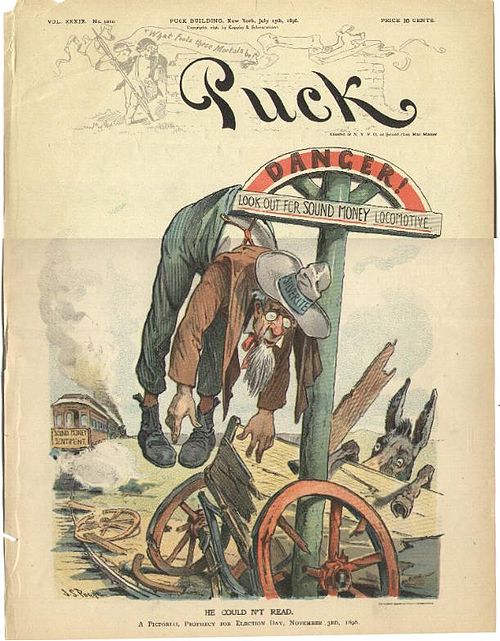
Cartoon from Puck showing a silverite farmer and a Democratic donkey whose wagon has been destroyed by the locomotive of sound money

1896 editorial cartoon equating the free silver movement with Frankenstein's monster.