Collective punishment
Videos
Collective punishment is a punishment or sanction imposed on a group or whole community for acts allegedly perpetrated by a member or some members of that group or area, which could be an ethnic or po
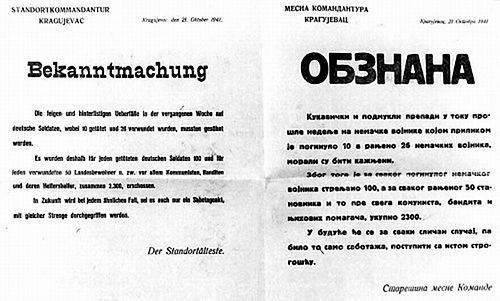
A public announcement by Nazi Germany in occupied Serbia on 21 October 1941, stating that the killing of 2,300 people in the Kragujevac massacre was carried out in retaliation for the killing of 10 German soldiers by the Yugoslav Partisans, and warning that punishments of the "same severity" (100 people for each killed soldier and 50 people for each wounded soldier) will take place for future incidents

Announcement of execution of 100 Polish roundup hostages, as revenge for the assassination of five German policemen and one SS member by Armia Krajowa resistance fighters in Nazi-occupied Poland. Warsaw, October 2, 1943

Residents inspect the ruins of an apartment in Gaza destroyed by Israeli airstrikes.
Kragujevac massacre
Videos
The Kragujevac massacre was the mass murder of between 2,778 and 2,794 mostly Serb men and boys in Kragujevac by German soldiers on 21 October 1941. It occurred in the German-occupied territory of Ser
Collective punishment
…A public announcement by Nazi Germany in occupied Serbia on 21 October 1941, stating that the killing of 2,300 people in the Kragujevac massacre was carried out in retaliation for the killing of 10 German soldiers by the Yugoslav Partisans, and warning that punishments of the "same severity…

German troops registering people from Kragujevac and its surrounding areas prior to their execution

Generalfeldmarschall Wilhelm Keitel of the OKW issued Hitler's order regarding the ratio of hostages to be shot.

General der Gebirgstruppe Franz Böhme was furious when his orders to burn down Gornji Milanovac and take hostages were not carried out.