Commodity money
Videos
Commodity money is money whose value comes from a commodity of which it is made. Commodity money consists of objects having value or use in themselves as well as their value in buying goods. This is i

Japanese commodity money before the 8th century AD: arrowheads, rice grains and gold powder. This is the earliest form of Japanese currency.

A bronze okpoho or manilla, the traditional commodity money in West Africa until the 1940s.

Axe-like grzywnas (commodity money) from Kostkowice, Poland, 9th to mid-10th century AD
Money
Videos
Money is any item or verifiable record that is generally accepted as payment for goods and services and repayment of debts, such as taxes, in a particular country or socio-economic context. The primar
Commodity money
…Commodity money is money whose value comes from a commodity of which it is made. Commodity money consists of objects having value or use in themselves (intrinsic value) as well…

Euro banknotes and coins
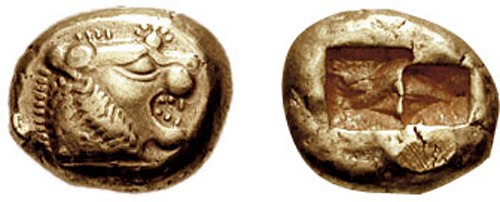
A 640 BC one-third stater electrum coin from Lydia. According to Herodotus, the Lydians were the first people to introduce the use of gold and silver coins. It is thought by modern scholars that these first stamped coins were minted around 650 to 600 BC.

Egyptian gold stater of Nectanebo II: reverse with hieroglyphs nfr-nb, minted in Egypt around 360 BC.

Song Dynasty Jiaozi, the world's earliest paper money