The Conservative Revolution, also known as the German neoconservative movement, or new nationalism, was a German national-conservative movement prominent during the Weimar Republic and Austria, in the years 1918–1933.
Undated portrait of Arthur Moeller van den Bruck
Many Conservative Revolutionaries cited Friedrich Nietzsche (c. 1875) as their mentor.
Oswald Spengler, author of The Decline of the West, embodied the Kulturpessimismus that partly characterised the Conservative Revolution.
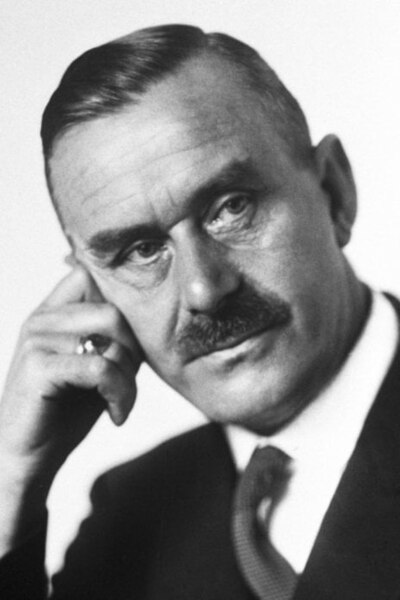
Thomas Mann, novelist and laureate of 1929 Nobel Prize, had been in his youth a vibrant opponent of democracy, although he later became one of the Weimar Republic's most prominent defenders.
The Völkisch movement was a German ethnic nationalist movement active from the late 19th century through the dissolution of the German Reich in 1945, with remnants in the Federal Republic of Germany afterwards. Erected on the idea of "blood and soil", inspired by the one-body-metaphor, and by the idea of naturally grown communities in unity, it was characterized by organicism, racialism, populism, agrarianism, romantic nationalism and – as a consequence of a growing exclusive and ethnic connotation – by antisemitism from the 1900s onward. Völkisch nationalists generally considered the Jews to be an "alien people" who belonged to a different Volk from the Germans.
magazine advocating for Volkisch politics - 1919