Constantinople
Videos
Constantinople, the modern Istanbul, was the capital of the Roman and Byzantine Empire from 330 until its takeover by the Ottoman Empire in 1453. After this, it continued to function as the Ottoman ca

Aerial view of Byzantine Constantinople and the Propontis (Sea of Marmara)

The Column of Constantine, built by Constantine I in 330 to commemorate the establishment of Constantinople as the new capital of the Roman Empire

The four bronze horses that were once in the Hippodrome of Constantinople are today put on display in Venice.

A simple cross: an example of iconoclast art in the Hagia Irene Church in Istanbul, which was secularized and today serves as a museum and concert hall.
Ottoman Empire
Videos
The Ottoman Empire, historically also known as the Turkish Empire or Turkey, was a state that spanned much of Southeastern Europe, West Asia, and North Africa from the 14th century to the early 20th c
Constantinople
…Constantinople, the modern Istanbul, was the capital of the Roman and Byzantine Empire from 330 until its takeover by the Ottoman Empire in 1453. After this, it continued to function as the Ottoman capital Konstantiniyye until the abolition of the Ottoman sultanate in 1922. It was located…
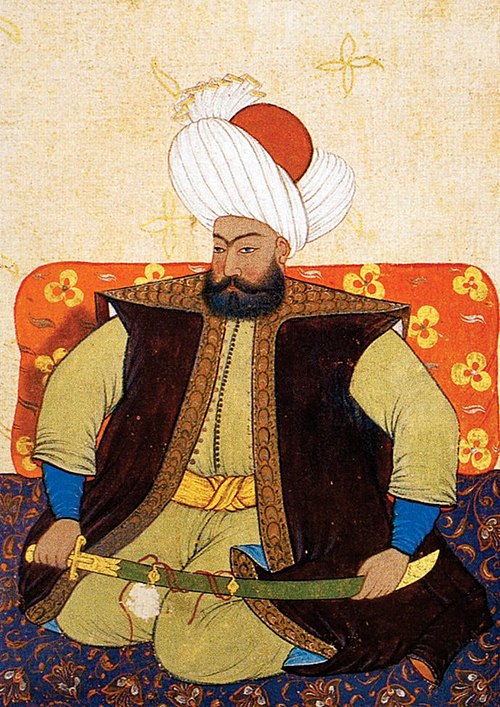
Ottoman miniature of Osman I by Yahya Bustanzâde (18th century)

The Battle of Nicopolis in 1396, as depicted in an Ottoman miniature from 1523

Sultan Mehmed the Conqueror's entry into Constantinople; painting by Fausto Zonaro (1854–1929)

Ottoman miniature of the Battle of Mohács in 1526