The constitution of the United Kingdom comprises the written and unwritten arrangements that establish the United Kingdom of Great Britain and Northern Ireland as a political body. Unlike in most coun

Parliament is central to the United Kingdom's democratic constitution. In the Palace of Westminster the House of Commons represents the public in 650 UK constituencies and chooses the prime minister at will. The House of Lords remains unelected but can be overruled.
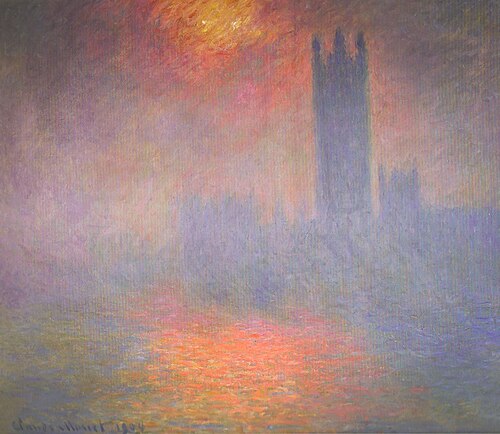
(London, Houses of Parliament. The Sun Shining through the Fog by Claude Monet, 1904). Parliament (from French, parler, "to talk") is the UK's highest law-making body.

The UK has committed to international law as a "sovereign" member, to augment its power through cooperation, in the United Nations since 1945. The first UN General Assembly was held at Methodist Central Hall, opened by Prime Minister Clement Attlee.

From 1973 to 2020, the UK was a member state of the European Union (and its predecessor organisation the European Communities), which is committed to "human dignity, freedom, democracy, equality, the rule of law and respect for human rights".
Bill of Rights 1689
Videos
The Bill of Rights 1689 is an act of the Parliament of England that set out certain basic civil rights and changed the succession to the English Crown. It remains a crucial statute in English constitu
Constitution of the United Kingdom
…land. Following the English conquest of Wales, the Laws in Wales Acts 1535 and 1542 integrated Wales into England. After the Glorious Revolution, the Bill of Rights 1689 and the Claim of Right Act 1689 cemented Parliament's position as the supreme law-making body, and said that the "election of members of Parliament…

English Bill of Rights of 1689

An 18th-century engraving, based on a drawing by Samuel Wale, of the Bill of Rights being presented to William III and Mary II