The Copper Country is an area in the Upper Peninsula of Michigan in the United States, including Keweenaw County, Michigan, Houghton, Baraga and Ontonagon counties as well as part of Marquette County. The area is so named as copper mining was prevalent there from 1845 until the late 1960s, with one mine continuing through 1995. In its heyday in the latter half of the 19th century and the early 20th century, the area was the world's greatest producer of copper.
Miners pose with lunch pails in hand on a mine rock pile outside of the Tamarack mineshaft. This mine was one of the most productive mines in the Copper Country.
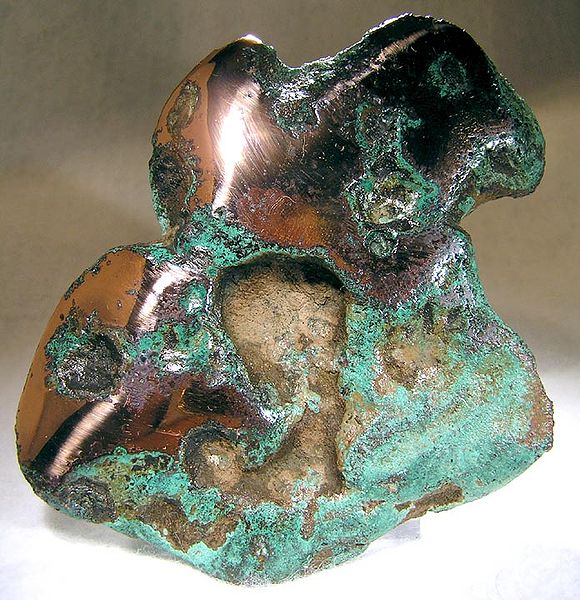
13-oz. nugget of native copper, Keweenaw County, Michigan. Size 9.5 x 8.6 x 1.7 cm.
Native copper from the Keweenaw Peninsula Michigan about 2.5 inches (6.4 cm) long.
Upper Peninsula of Michigan
The Upper Peninsula of Michigan—also known as Upper Michigan or colloquially the U.P.—is the northern and more elevated of the two major landmasses that make up the U.S. state of Michigan; it is separated from the Lower Peninsula by the Straits of Mackinac. It is bounded primarily by Lake Superior to the north, separated from the Canadian province of Ontario at the east end by the St. Marys River, and flanked by Lake Huron and Lake Michigan along much of its south. Although the peninsula extends as a geographic feature into the state of Wisconsin, the state boundary follows the Montreal and Menominee rivers and a line connecting them.
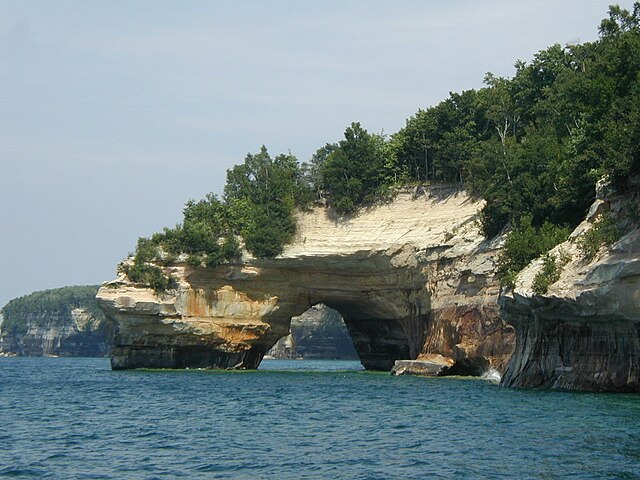
Image: Pictured Rocks National Lakeshore arch
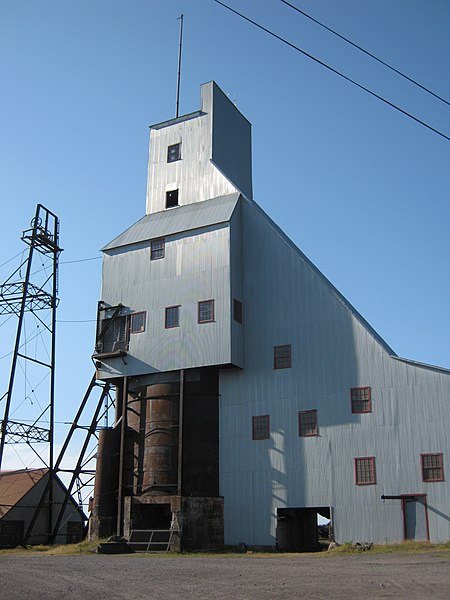
Image: Quincy Mine Shaft House
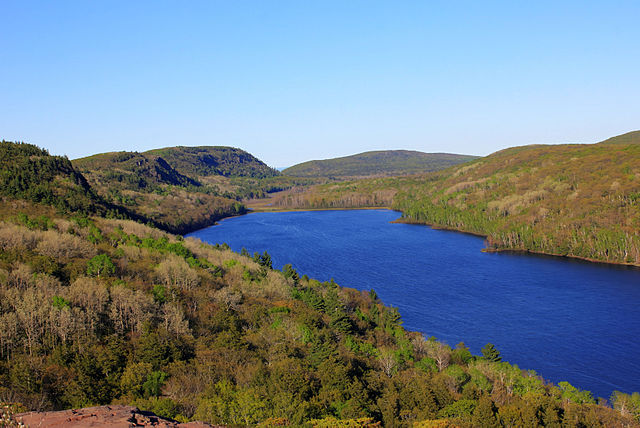
Image: Gfp michigan porcupine mountains state park full view of lake of the clouds
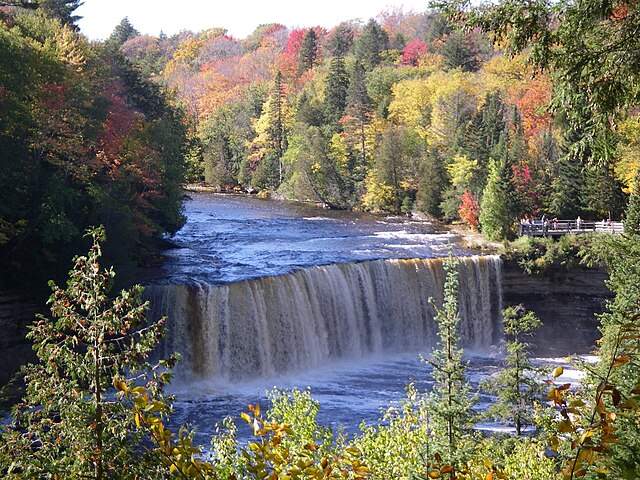
Image: Upper Tahquamenon Falls Fall 2007