Cradle of civilization
Videos
The earliest human civilizations developed independently of each other and a cradle of civilization is a location and a culture from which one of them emerged. A civilization is any complex society ch

Among the various cradles of civilization is Ancient Egypt. Pictured are the Giza Pyramids.
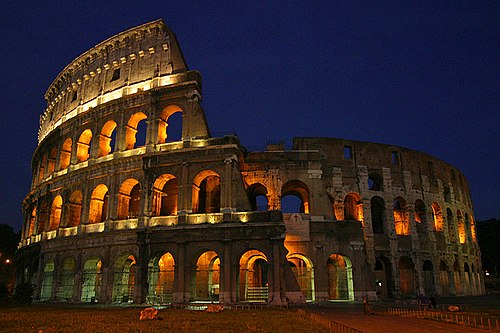
Lightmatter colosseum

Acropolis of Athens 01361
Mesopotamia
Videos
Mesopotamia is a historical region of West Asia situated within the Tigris–Euphrates river system, in the northern part of the Fertile Crescent. It corresponds roughly to the territory of modern Iraq.
Cradle of civilization
…communication beyond signed or spoken languages (namely, writing systems and graphic arts). Scholars generally acknowledge six cradles of civilization: Mesopotamia, Ancient Egypt, Ancient India and Ancient China are believed to be the earliest in Afro-Eurasia, while the Caral–Supe civilization of coastal Peru and…

The Tigris river flowing through the region of modern Mosul in Upper Mesopotamia.

Mesopotamian Marshes at night, southern Iraq. A reed house (Mudhif) and a narrow canoe (Mashoof) are in the water. Mudhif structures have been one of the traditional types of structures, built by the Marsh people of southern Mesopotamia for at least 5,000 years. A carved elevation of a typical mudhif, dating to around 3,300 BC was discovered at Uruk.

One of 27 Statues of Gudea, a ruler around 2090 BC

After early starts in Jarmo (red dot, c. 7500 BC), the civilization of Mesopotamia in the 7th–5th millennium BC was centered around the Hassuna culture in the north, the Halaf culture in the northwest, the Samarra culture in central Mesopotamia and the Ubaid culture in the southeast, which later expanded to encompass the whole region.