Crassulacean acid metabolism
Videos
Crassulacean acid metabolism, also known as CAM photosynthesis, is a carbon fixation pathway that evolved in some plants as an adaptation to arid conditions that allows a plant to photosynthesize duri
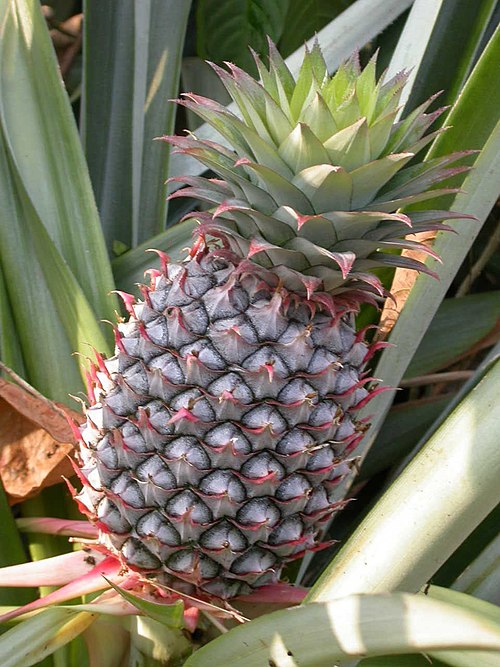
The pineapple is an example of a CAM plant.

Overnight graph of CO2 absorbed by a CAM plant

CAM is named after the family Crassulaceae, to which the jade plant belongs.

Cross section of a CAM (Crassulacean acid metabolism) plant, specifically of an agave leaf. Vascular bundles shown. Drawing based on microscopic images courtesy of Cambridge University Plant Sciences Department.
C3 carbon fixation
Videos
C3 carbon fixation is the most common of three metabolic pathways for carbon fixation in photosynthesis, the other two being C4 and CAM. This process converts carbon dioxide and ribulose bisphosphate
Crassulacean acid metabolism
…reduces the loss of water through evapotranspiration, allowing such plants to grow in environments that would otherwise be far too dry. Plants using only C3 carbon fixation, for example, lose 97% of the water they take up through the roots to transpiration - a high cost avoided by plants able to employ CAM. The C4 pathway…

Cross section of a C3 plant, specifically of an Arabidopsis thaliana leaf. Vascular bundles shown. Drawing based on microscopic images courtesy of Cambridge University Plant Sciences Department.