Cumans
Videos
The Cumans or Kumans were a Turkic nomadic people from Central Asia comprising the western branch of the Cuman–Kipchak confederation who spoke the Cuman language. They are referred to as Polovtsians i

Court of Seljuk ruler Tughril III, circa 1200 CE.

Asia, circa 1200
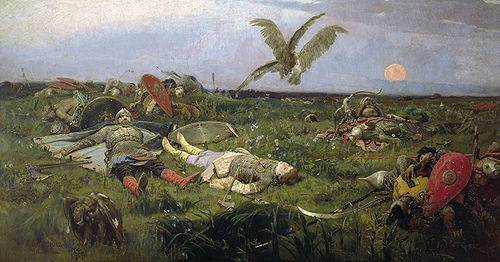
The field of Igor Svyatoslavich's battle with the Cuman–Kipchaks, by Viktor Vasnetsov

After the Battle of Kerlés in 1068, Saint Ladislaus is fighting a duel with a Cuman warrior who kidnapped a girl. (Chronicon Pictum, 1358)
Cumania
Videos
The name Cumania originated as the Latin exonym for the Cuman–Kipchak confederation, which was a tribal confederation in the western part of the Eurasian Steppe, between the 10th and 13th centuries. T
Cumans
…The Cumans or Kumans were a Turkic nomadic people from Central Asia comprising the western branch of the Cuman–Kipchak confederation who spoke the Cuman language. They are referred to as Polovtsians (Polovtsy) in Rus' chronicles, as "Cumans" in Western sources, and as "Kipchaks" in…

Cuman-Qıpčaq warrior-statue with musical instrument carved at its feet (left). Simferopol Museum, Crimea, Ukraine.

Cuman/Kipchak statue, 12th century, Luhansk

Cuman statues, Moscow State Historical Museum

Cuman-Kipchak statue, 12th-13th century, Ukraine