Danaïdes
Videos
Photos
In Greek mythology, the Danaïdes, also Danaides or Danaids, were the fifty daughters of Danaus. In the Metamorphoses, Ovid refers to them as the Belides after their grandfather Belus. They were to marry the 50 sons of Danaus' twin brother Aegyptus, a mythical king of Egypt. In the most common version of the myth, all but one of them killed their husbands on their wedding night and are condemned to spend eternity carrying water in a sieve or perforated device. In the classical tradition, they came to represent the futility of a repetitive task that can never be completed.
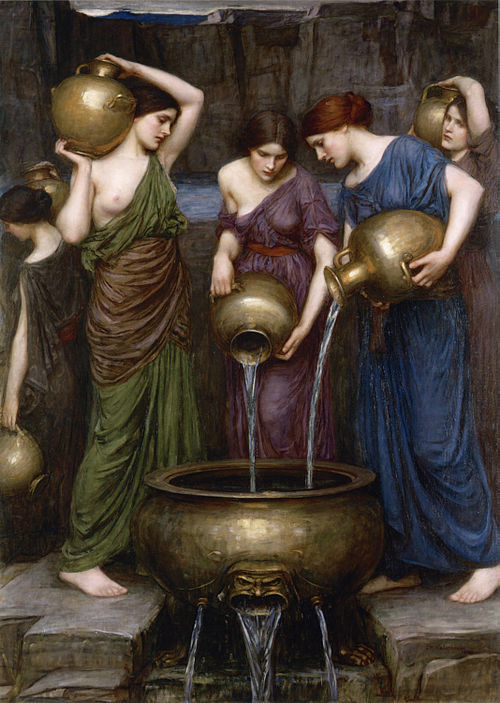
The Danaides (1904), a Pre-Raphaelite interpretation by John William Waterhouse

The Danaïdes kill their husbands, miniature by Robinet Testard.

John William Waterhouse, The Danaïdes (1906), Aberdeen Archives, Gallery & Museums Collection
Danaus
Videos
Photos
In Greek mythology, Danaus was the king of Libya. His myth is a foundation legend of Argos, one of the foremost Mycenaean cities of the Peloponnesus. In Homer's Iliad, "Danaans" and "Argives" commonly designate the Greek forces opposed to the Trojans.
The Danaides (1904), a Pre-Raphaelite interpretation by John William Waterhouse
The Danaides kill their husbands, miniature by Robinet Testard.