Dane axe
Videos
The Dane axe or long axe is a type of European early medieval period two-handed battle axe with a very long shaft, around 0.9–1.2 metres at the low end to 1.5–1.7 metres or more at the long end. Sometimes called a broadaxe, the blade was broad and thin, intended to give a long powerful cut when swung, effective against cavalry, shields and unarmored opponents.
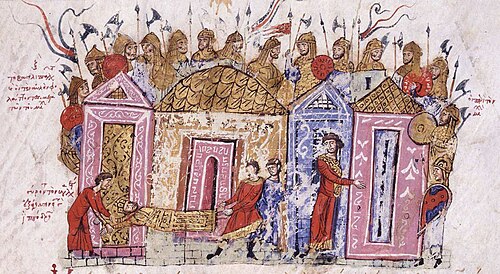
Depiction of the Varangian Guard with Dane axes, from the 12th-century Madrid Skylitzes manuscript.

Image: Tapisserie agriculture (cropped)

Image: Dane Axe

Image: Dane Axe
Battle of Hastings
Videos
The Battle of Hastings was fought on 14 October 1066 between the Norman-French army of William, the Duke of Normandy, and an English army under the Anglo-Saxon King Harold Godwinson, beginning the Norman Conquest of England. It took place approximately 7 mi (11 km) northwest of Hastings, close to the present-day town of Battle, East Sussex, and was a decisive Norman victory.

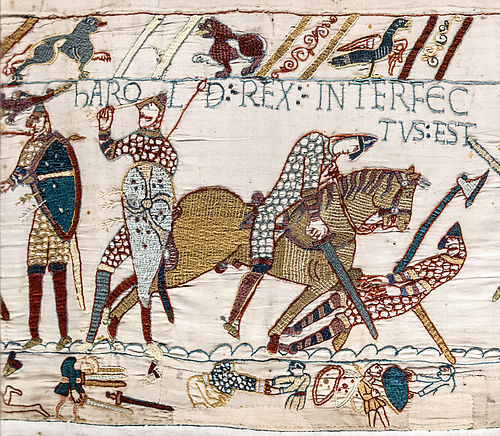
Harold Rex Interfectus Est: "King Harold is killed". Scene from the Bayeux Tapestry depicting the Battle of Hastings and the death of Harold.
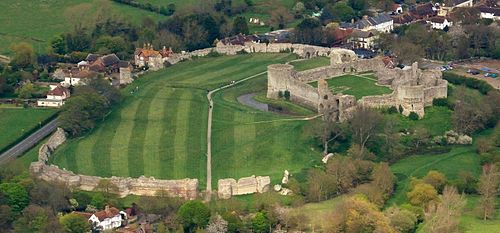
On landing at Pevensey, William established a castle within the ruins of the Roman fort. While the outermost walls date from the Roman period, the surviving buildings of the inner bailey post-date William.

Norman knights and archers at the Battle of Hastings, as depicted in the Bayeux Tapestry

Scene from the Bayeux Tapestry depicting mounted Norman soldiers attacking Anglo-Saxons who are fighting on foot in a shield wall