Dashavatara
Videos
The Dashavatara are the ten primary avatars of Vishnu, a principal Hindu god. Vishnu is said to descend in the form of an avatar to restore cosmic order. The word Dashavatara derives from daśa, meanin
Hindu god Vishnu (centre) surrounded by his ten major avatars (Krishna-Buddha version). Anticlockwise from top left: Matsya; Kurma; Varaha; Narasimha; Vamana; Parashurama; Rama; Krishna; Buddha and Kalki

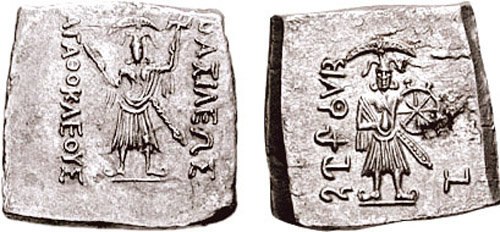
Balarama-Samkarshana, holding the gada and plough, and Vasudeva-Krishna, holding the sankha (a conch) and chakra, the half-brother avatars of Vishnu, are the earliest representations of avatars. Mint of the non-Hindu coinage of Agathocles, an Indo-Greek ruler, circa 185-170 BCE

Hindu god Vishnu's ten major avatars (Balarama-Krishna version) Dasavatara shrine, 18th century ivory (National Museum, New Delhi). From top descending: Matsya; Kurma; Varaha; Narasimha; Vamana; Parashurama; Rama; Balarama ; Krishna and Kalki.

1st to 5th of the Dashavataras on Udupi Sri Krishna Matha gopuram, Karnataka.
Parashurama
Videos
Parashurama, also referred to as Rama Jamadagnya, Bhargava Rama, and Virarama, is the sixth avatar among the Dashavatara of the preserver god Vishnu in Hinduism. He is described as one of the Chiranji
Dashavatara
…Puranas and other texts is [...] Krishna, Buddha." Most draw from the following set of figures, in this order: Matsya, Kurma, Varaha, Narasimha, Vamana, Parashurama, Rama, Krishna, or Balarama, Buddha or Krishna, and Kalki. In traditions that omit Krishna, he often replaces Vishnu as the source of all avatars. Some…

Parashuram by Raja Ravi Varma

Painting in Sri Bhargavaraghaviyam. Painting depicting the court of King Janaka.

Parashurama, surrounded by settlers, commanding Varuna, god of the waters to recede to make land known as 'Parashurama Kshetra' from Gokarna to Kanyakumari for the Brahmins

Parashurama with his axe (two representations)