Decay heat
Videos
Decay heat is the heat released as a result of radioactive decay. This heat is produced as an effect of radiation on materials: the energy of the alpha, beta or gamma radiation is converted into the thermal movement of atoms.
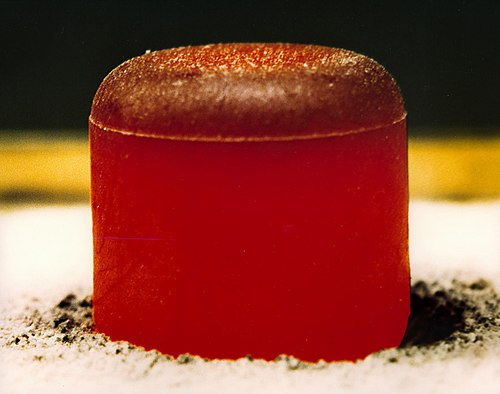
RTG pellet glowing red due to the heat generated by the radioactive decay of plutonium-238 dioxide, after a thermal isolation test.
A nuclear and radiation accident is defined by the International Atomic Energy Agency (IAEA) as "an event that has led to significant consequences to people, the environment or the facility." Examples include lethal effects to individuals, large radioactivity release to the environment, or a reactor core melt. The prime example of a "major nuclear accident" is one in which a reactor core is damaged and significant amounts of radioactive isotopes are released, such as in the Chernobyl disaster in 1986 and Fukushima nuclear disaster in 2011.

Following the 2011 Japanese Fukushima nuclear disaster, authorities shut down the nation's 54 nuclear power plants. The Fukushima site remains radioactive, with some 30,000 evacuees still living in temporary housing, although nobody has died or is expected to die from radiation effects. The difficult cleanup job will take 40 or more years, and cost tens of billions of dollars.

The Kashiwazaki-Kariwa Nuclear Power Plant, a Japanese nuclear plant with seven units, the largest single nuclear power station in the world, was completely shut down for 21 months following an earthquake in 2007. Safety-critical systems were found to be undamaged by the earthquake.

The abandoned city of Pripyat, Ukraine, following the Chernobyl disaster. The Chernobyl nuclear power plant is in the background.
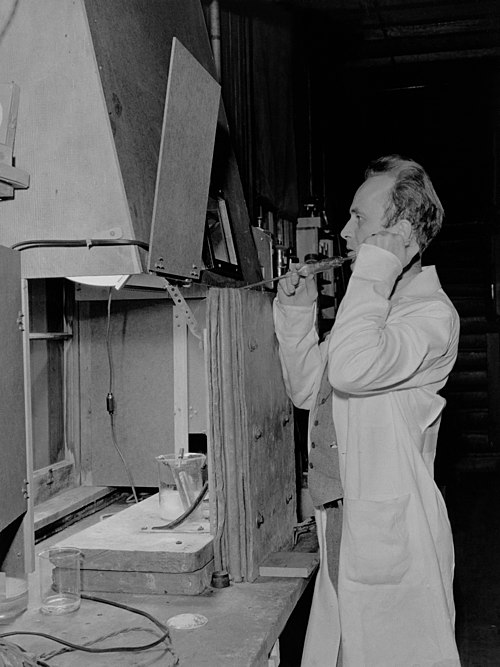
Dr. Joseph G. Hamilton was the primary researcher for the human plutonium experiments done at U.C. San Francisco from 1944 to 1947. Hamilton wrote a memo in 1950 discouraging further human experiments because the AEC would be left open "to considerable criticism" since the experiments as proposed had "a little of the Buchenwald touch."