Delhi Sultanate
Videos
The Delhi Sultanate or the Sultanate of Delhi was a late medieval empire primarily based in Delhi that stretched over large parts of the Indian subcontinent for more than three centuries. The sultanat

Tomb of Iltutmish (r. 1211–1236) in the Qutb Minar complex.

The Alai Darwaza, completed in 1311 during the Khalji dynasty.
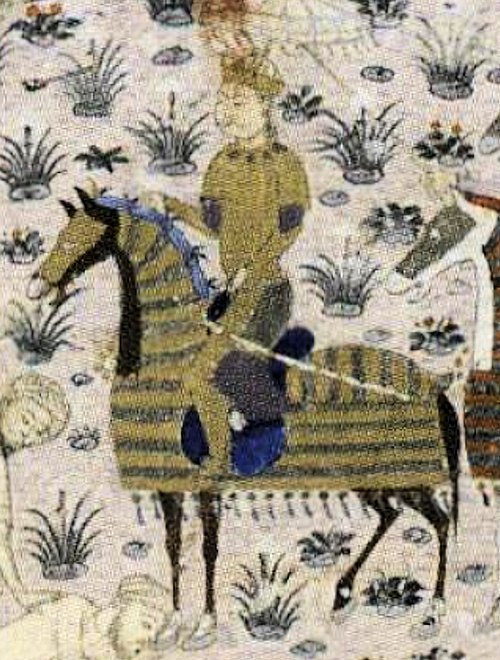
Depiction of Ghiyath al-Din Tughluq, founder of the Tughlaq dynasty, in the Basātin al-uns by Ikhtisān-i Dabir, a member of the Tughluq court and an ambassador to Iran. Ca. 1410 Jalayirid copy of 1326 lost original.

A base metal coin of Muhammad bin Tughlaq that led to an economic collapse.
Qutb ud-Din Aibak
Videos
Qutb ud-Din Aibak was a Turkic general of the Ghurid emperor Muhammad Ghori. He was in charge of the Ghurid territories in northern India, and after Muhammad Ghori's assassination in 1206, he establis
Delhi Sultanate
…the Delhi Sultanate was originally one of several principalities ruled by the Turkic slave-generals of Muhammad Ghori, including Taj al-Din Yildiz, Qutb ud-Din Aibak, Bahauddin Tughril and Nasir ad-Din Qabacha, who had inherited and divided the Ghurid territories amongst themselves. Khalji and Tughlaq rule ushered…

Grave of Qutb ud-Din Aibak, in Anarkali Bazaar in Lahore

The Adhai Din Ka Jhonpra mosque in Ajmer was started in 1192 and completed in 1199 by Qutb al-Din Aibak.
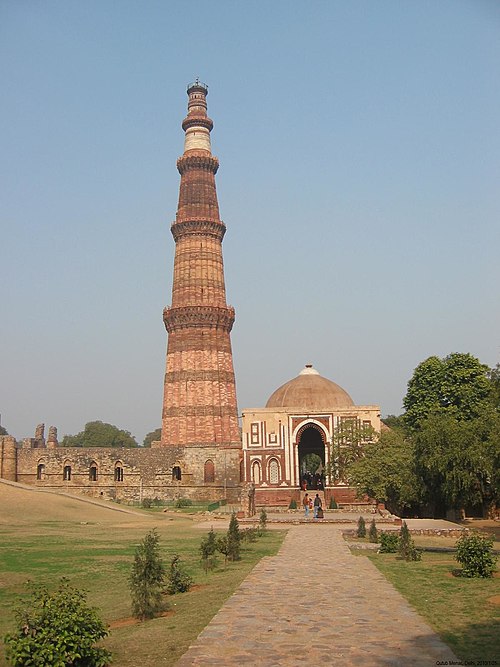
The Qutb Minar in Delhi was started by Qutb al-Din Aibak in 1199 and completed by his son-in-law Iltutmish in 1220. It is an example of the Mamluk dynasty's works

A modern artist's impression of the accident that caused Aibak's death