Denial and deception (D&D) is a Western theoretical framework for conceiving and analyzing military intelligence techniques pertaining to secrecy and deception. Originating in the 1980s, it is roughly based on the more pragmatic Soviet practices of maskirovka but it has a more theoretical approach compared to the latter.
Dummy aircraft, like the one pictured (modelled after the Douglas A-20 Havoc) were used in the deception tactics of Operation Fortitude during World War II.
Deception is an act or statement that misleads, hides the truth, or promotes a belief, concept, or idea that is not true. This occurs when a deceiver uses information against a person to make them believe an idea is true. Deception can be used with both verbal and nonverbal messages. The person creating the deception knows it to be false while the receiver of the message has a tendency to believe it. It is often done for personal gain or advantage. Deception can involve dissimulation, propaganda and sleight of hand as well as distraction, camouflage or concealment. There is also self-deception, as in bad faith. It can also be called, with varying subjective implications, beguilement, deceit, bluff, mystification, ruse, or subterfuge.
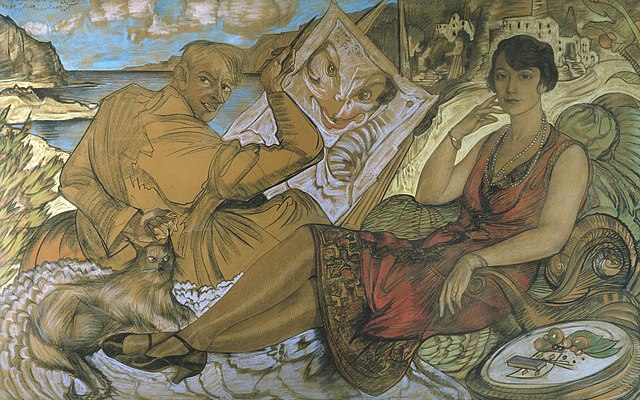
Deception of woman, with self-portrait by Stanisław Ignacy Witkiewicz, 1927 (National Museum, Warsaw)
This wallaby has adaptive colouration which allows it to blend with its environment.
The Beguiling of Merlin, by Edward Burne-Jones, 1874
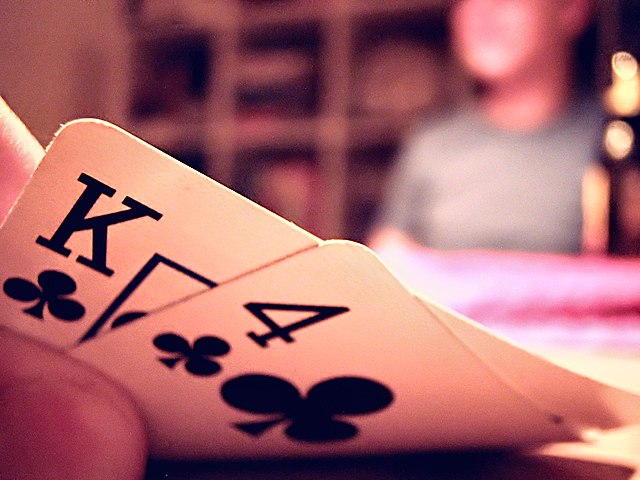
A player examines their cards in a game of Texas hold 'em.