Colonel Denzil Holles, 1st Baron Holles was an English politician and army officer who was one of the Five Members whose attempted arrest by Charles I in January 1642 sparked the First English Civil W
Portrait by Edward Bower, c. 1640


John Holles, 1st Earl of Clare; "a bitter and disappointed father"

Charles attempts to arrest the Five Members, January 1642; a Victorian era re-imagining

Oliver Cromwell c. 1649; hostility towards Cromwell became a key component of Holles' political philosophy
The Whigs were a political party in the Parliaments of England, Scotland, Ireland, Great Britain and the United Kingdom. Between the 1680s and the 1850s, the Whigs contested power with their rivals, t
Denzil Holles, 1st Baron Holles
…Charles II made him Baron Holles and Ambassador to France from 1663 to 1666, an appointment that proved unsuccessful. Holles gradually became part of the Whig opposition, backing the 1673 Test Act and exclusion in 1679 of the Catholic heir, James, Duke of York. He died in February 1680 and was buried in…

Anthony Ashley Cooper, 1st Earl of Shaftesbury, painted more than once during his chancellorship in 1672 by John Greenhill
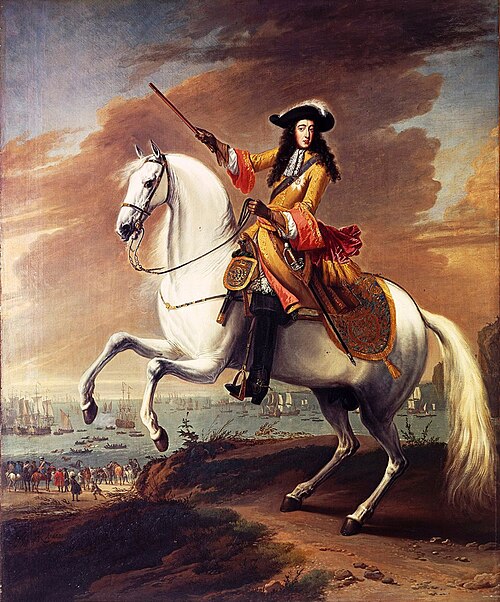
Equestrian portrait of William III by Jan Wyck, commemorating the landing at Brixham, Torbay, 5 November 1688

A c. 1705 portrait of John Somers, 1st Baron Somers by Godfrey Kneller

In A Block for the Wigs (1783), caricaturist James Gillray caricatured Charles James Fox's return to power in a coalition with Frederick North, Lord North (George III is the blockhead in the centre).