Devekut
Videos
Devekut, debekuth, deveikuth or deveikus is a Jewish concept referring to closeness to God. It may refer to a deep, trance-like meditative state attained during Jewish prayer, Torah study, or when per

The Hasidic Rebbe Nachman of Breslov inspires a search for deveikut in distanced Jews. The annual Rosh Hashana kibbutz pilgrimage to his grave in Uman Ukraine, attracts many secular seekers of spirituality.

Mikveh (Ritual immersion pool) in Bircza, Poland. Hasidic custom encouraged male followers to prepare for daily or Sabbath prayer with immersion for mystical elevation

Hasidism found expression in distinctive Niggunim (ecstatic melodies). Private meditative deveikut niggunim, often in prayer, are usually wordless and bring elevation in worship.
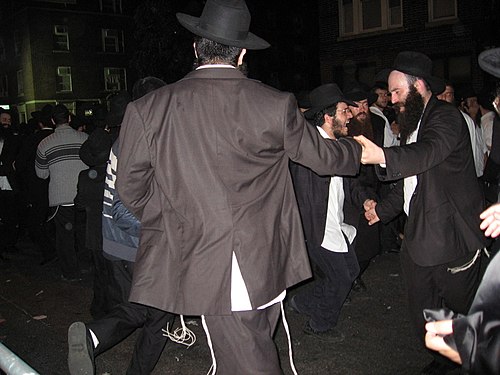
Joyous niggunim bring the inspiration of deveikut into action and celebration of Hasidic camaraderie.
Baal Shem Tov
Videos
Israel ben Eliezer, known as the Baal Shem Tov or BeShT, was a Jewish mystic and healer regarded as the founder of Hasidic Judaism. A baal shem tov is a "Master of the Good Name". The term has also be
Devekut
…clinging," is to miss this deeper, trickier "respectful withholding" aspect of the word's particular meaning. The early Hasidic movement around the Baal Shem Tov developed from elite esoteric mystical circles of pneumatics, sometimes connected in practical fellowship. True Deveikut in early Hasidism reflected…
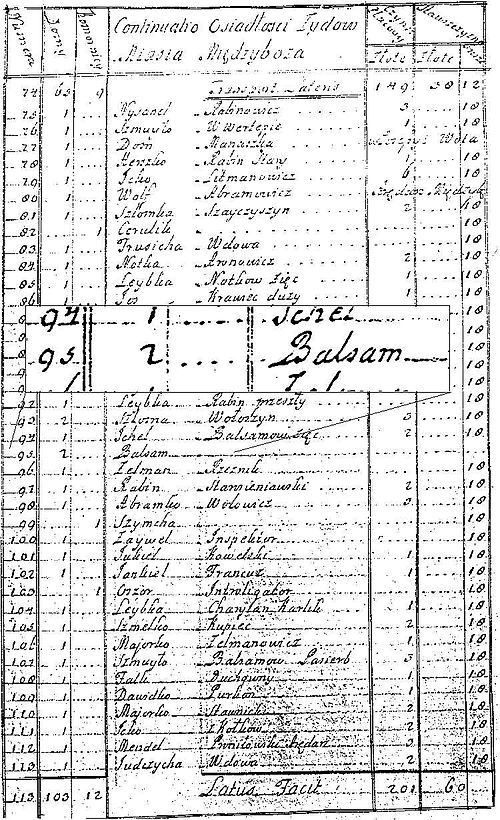
1758 Polish tax census of Medzhybizh showing "Balsam" in house #95

Monument to the Baal Shem Tov in Medzhybizh (before restoration in 2006–2008), inscribed רבי ישראל בעל שם טוב

The old synagogue of Medzhybizh (c. 1915). This building, which was never used by Israel (he preferred an alternate minyan), burned during World War II. Today a replica attracts tourists to Medzhybizh under the name "Baal Shem Tov Shul". A second replica opened in 2022 as a community synagogue in Wesley Hills, NY.

An 18th-century Kabbalistic siddur in the Chabad library. Chabad claims that Israel used this siddur.