Dhyana in Buddhism
Videos
In the oldest texts of Buddhism, dhyāna or jhāna is a component of the training of the mind, commonly translated as meditation, to withdraw the mind from the automatic responses to sense-impressions a

Buddha depicted in dhyāna, Amaravati, India

Buddha in Dhyana, which in this context means: The meditative training stage on the path to Samadhi.

Bodhisattva seated in meditation. Afghanistan, 2nd century CE.
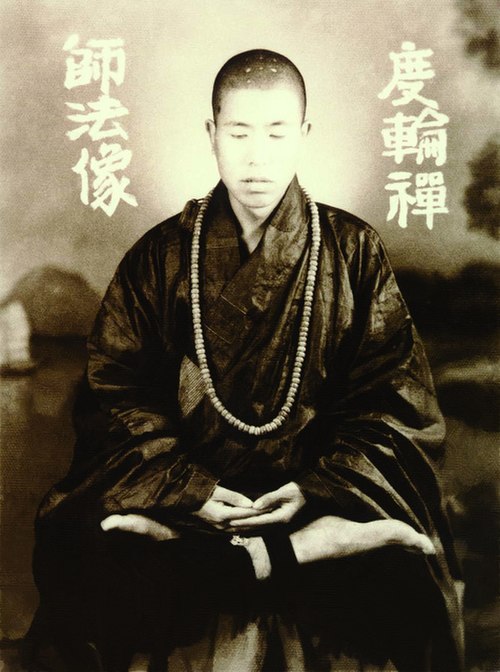
Venerable Hsuan Hua meditating in the Lotus Position. Hong Kong, 1953
Zen
Videos
Zen is a Mahayana Buddhist tradition that developed in China during the Tang dynasty by blending Indian Mahayana Buddhism, particularly Yogacara and Madhyamaka philosophies, with Chinese Taoist though
Dhyana in Buddhism
…comprehensive and integrated understanding and approach, based on the oldest descriptions of dhyāna in the suttas. In Buddhist traditions of Chan and Zen (the names of which are, respectively, the Chinese and Japanese pronunciations of dhyāna), as in Theravada and Tiantai, anapanasati (mindfulness of…

Eiheiji gate

Kodo Sawaki practicing zazen, his hands make the "cosmic mudra" (Jp: hokkai jōin 法界定印), which is common in Japanese Soto Zen

Calligraphy of "Mu" (Hanyu Pinyin: wú) by Torei Enji. It figures in the famous Zhaozhou's dog kōan