Zen
Videos
Zen is a Mahayana Buddhist tradition that developed in China during the Tang dynasty by blending Indian Mahayana Buddhism, particularly Yogacara and Madhyamaka philosophies, with Chinese Taoist though

Eiheiji gate

Kodo Sawaki practicing zazen, his hands make the "cosmic mudra" (Jp: hokkai jōin 法界定印), which is common in Japanese Soto Zen
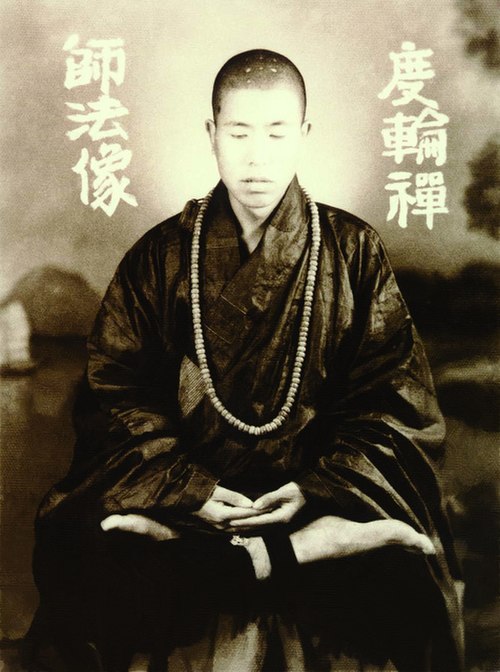
Venerable Hsuan Hua meditating in the lotus position, Hong Kong, 1953

Calligraphy of "Mu" (Hanyu Pinyin: wú) by Torei Enji. It figures in the famous Zhaozhou's dog kōan
Mahayana
Videos
Mahāyāna is the largest branch of Buddhism, followed by the older branch Theravada. It is a broad group of Buddhist traditions, texts, philosophies, and practices that developed in various regions and
Zen
…Chan; in Korean: Seon, and Vietnamese: Thiền) is a Mahayana Buddhist tradition that developed in China during the Tang dynasty by blending Indian Mahayana Buddhism, particularly Yogacara and Madhyamaka philosophies, with Chinese Taoist thought, especially Neo-Daoist. Zen originated as the Chan school (禪宗, Chanzōng…

The Five Buddhas in Shishoin Temple (Tokyo). Mahāyāna holds there are multiple buddhas which one can interact with. These buddhas are also able to send manifestations to our world to teach and guide beings.

Mahāyāna Buddhist triad, including Bodhisattva Maitreya, the Buddha, and Bodhisattva Avalokiteśvara. 2nd–3rd century CE, Gandhāra
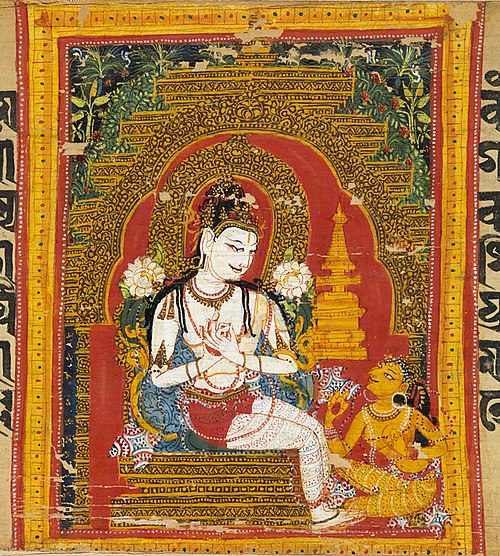
An illustration in a manuscript of the Aṣṭasāhasrikā Prajñāpāramitā Sūtra from Nalanda, depicting the bodhisattva Maitreya, an important figure in Mahāyāna

Seated Avalokiteshvara bodhisattva. Gandharan, from Loriyan Tangai. Kushan period, 1st – 3rd century CE. Indian Museum, Calcutta