Diamond Sutra
Videos
The Diamond Sūtra is a Mahāyāna Buddhist sutra from the genre of Prajñāpāramitā sutras. Translated into a variety of languages over a broad geographic range, the Diamond Sūtra is one of the most influ

Front line of the Chinese Diamond Sūtra, printed in the 9th year of the Xiantong era of the Tang dynasty, i.e. CE 868, the oldest known dated printed book in the world. British Library

This painting is a redrawing based on a sketch of the Diamond Sūtra found in the Mogao Caves.

Frontispiece of the 'Diamond Sutra' written in Chinese, engraved and gilded on nephrite jade. China, 1732. Chester Beatty Library
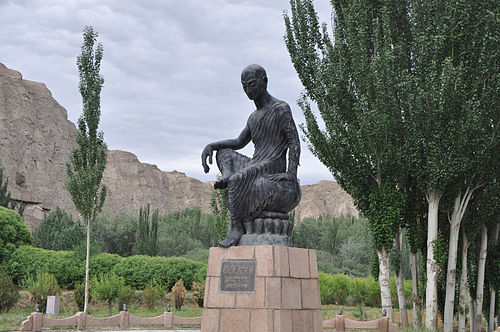
Statue of Kumārajīva in front of the Kizil Caves in Kuqa, Xinjiang province, China
Mahayana
Videos
Mahāyāna is the largest branch of Buddhism, followed by the older branch Theravada. It is a broad group of Buddhist traditions, texts, philosophies, and practices that developed in various regions and
Diamond Sutra
…The Diamond Sūtra (Sanskrit: Vajracchedikā Prajñāpāramitā Sūtra) is a Mahāyāna Buddhist sutra from the genre of Prajñāpāramitā ('perfection of wisdom') sutras. Translated into a variety of languages over a broad geographic range…

The Five Buddhas in Shishoin Temple (Tokyo). Mahāyāna holds there are multiple buddhas which one can interact with. These buddhas are also able to send manifestations to our world to teach and guide beings.

Mahāyāna Buddhist triad, including Bodhisattva Maitreya, the Buddha, and Bodhisattva Avalokiteśvara. 2nd–3rd century CE, Gandhāra
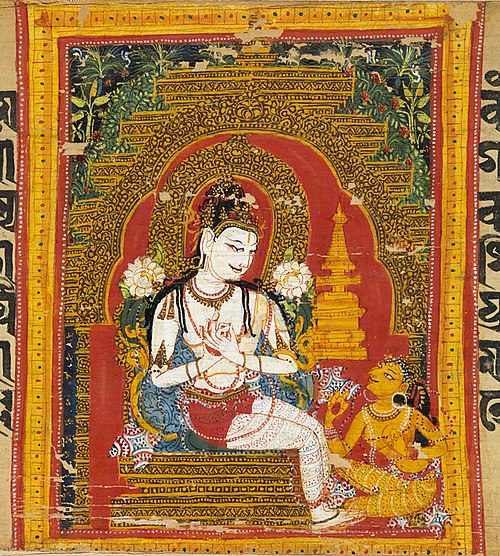
An illustration in a manuscript of the Aṣṭasāhasrikā Prajñāpāramitā Sūtra from Nalanda, depicting the bodhisattva Maitreya, an important figure in Mahāyāna

Seated Avalokiteshvara bodhisattva. Gandharan, from Loriyan Tangai. Kushan period, 1st – 3rd century CE. Indian Museum, Calcutta