Digital elevation model
Videos
A digital elevation model or digital surface model is a 3D computer graphics representation of elevation data to represent terrain or overlaying objects, commonly of a planet, moon, or asteroid. A "gl
MOLA digital elevation model showing the two hemispheres of Mars. This image appeared on the cover of Science magazine in May 1999.


Gatewing X100 unmanned aerial vehicle

Digital Elevation Model – Red Rocks Amphitheater, Colorado obtained using a UAV

Bezmiechowa airfield 3D Digital Surface Model obtained using Pteryx UAV flying 200 m above hilltop
Lidar
Videos
Lidar is a method for determining ranges by targeting an object or a surface with a laser and measuring the time for the reflected light to return to the optical receiver. Lidar may operate in a fixed
Digital elevation model
…measured) DEM, whereas the Raster DEM is referred to as a secondary (computed) DEM. The DEM could be acquired through techniques such as photogrammetry, lidar, IfSAR or InSAR, land surveying, etc. (Li et al. 2005). DEMs are commonly built using data collected using remote sensing techniques, but they may also…

Lidar-derived image of the Marching Bears Mound Group, Effigy Mounds National Monument, United States
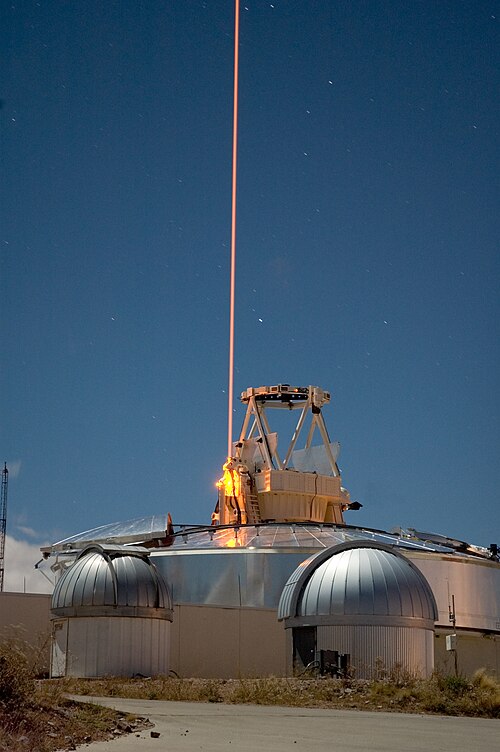
A frequency addition source of optical radiation (FASOR) used at the Starfire Optical Range for lidar and laser guide star experiments is tuned to the sodium D2a line and used to excite sodium atoms in the upper atmosphere.

This lidar may be used to scan buildings, rock formations, et cetera, to produce a 3D model. The lidar can aim its laser beam in a wide range: its head rotates horizontally; a mirror tilts vertically. The laser beam is used to measure the distance to the first object on its path.

A DSM lidar view of Ferrybridge Henge (bottom right) and the surrounding roads and area in West Yorkshire