Dowding system
Videos
The Dowding system was the world's first wide-area ground-controlled interception network, controlling the airspace across the United Kingdom from northern Scotland to the southern coast of England. I
This illustration shows the Dowding reporting chain for a highlighted Sector. ROC reports flow back through the Sector controls to FCHQ; it does not show the radars, which were still officially secret when this was published. Information then flows back from FCHQ to Group, between groups, and down to Sectors, and then to the defences.


Chain Home coverage 1939–1940 extended over the entire British/Channel area and some of France.

Dowding's support for radar was matched by his understanding that radar alone was not a panacea.

Patrick Blackett's work on the Dowding system would form the basis of the field of mathematics known as operations research.
Battle of Britain
Videos
The Battle of Britain was a military campaign of the Second World War, in which the Royal Air Force and the Fleet Air Arm of the Royal Navy defended the United Kingdom against large-scale attacks by N
Dowding system
…anti-aircraft artillery against enemy targets. The system was built by the Royal Air Force just before the start of World War II, and proved decisive in the Battle of Britain. The Dowding system was developed after tests demonstrated problems relaying information to the fighters before it was out of date. Air Chief Marshal…

Spitfire and He 111 during Battle of Britain 1940
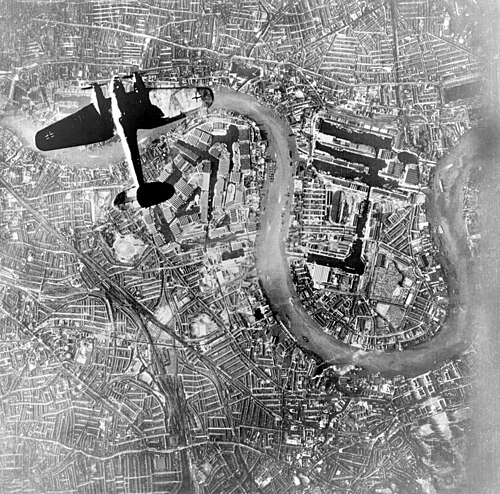
Heinkel He 111 over Wapping, East London

Heinkel He 111 during the Battle of Britain

RAF station under attack during Battle of Britain 1940