Dutch Golden Age painting
Videos
Dutch Golden Age painting is the painting of the Dutch Golden Age, a period in Dutch history roughly spanning the 17th century, during and after the later part of the Eighty Years' War for Dutch indep
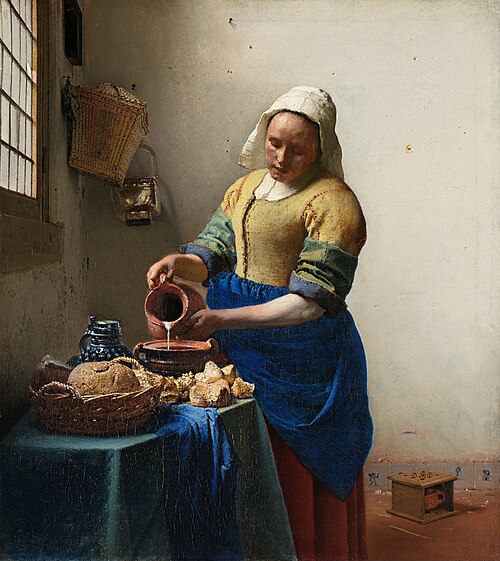
Johannes Vermeer, The Milkmaid (1658–1661)

Frans Hals' tronie, with the later title Gypsy Girl. 1628–30. Oil on wood, 58 cm × 52 cm (23 in × 20 in). The tronie includes elements of portraiture, genre painting, and sometimes history painting.

Paulus Potter, The Young Bull (1647); 3.4 metres wide. An unusually monumental animal painting that challenges the hierarchy of genres.

The Haarlem Painter's Guild in 1675, by Jan de Bray, whose self-portrait is the second from the left
Johannes Vermeer
Videos
Johannes Vermeer was a Dutch painter who specialized in domestic interior scenes of middle-class life. He is considered one of the greatest painters of the Dutch Golden Age. During his lifetime, he wa
Dutch Golden Age painting
…without a strong contemporary reputation, or who had fallen out of fashion, including many now considered among the greatest of the period, such as Vermeer, Frans Hals and Rembrandt in his last years, had considerable problems earning a living, and died poor; many artists had other jobs, or abandoned art…

Detail of the painting The Procuress (c. 1656), believed to be a self-portrait by Vermeer

Replica of the St. Luke Guildhouse on Voldersgracht in Delft

A View of Delft after the Explosion of 1654, by Egbert van der Poel
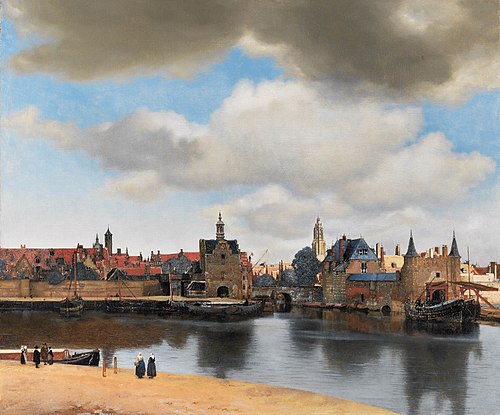
View of Delft (1660–1661): "He took a turbulent reality, and made it look like Heaven on earth."