Early thermal weapons
Videos
Early thermal weapons, which used heat or burning action to destroy or damage enemy personnel, fortifications or territories, were employed in warfare during the ancient and post-classical periods.
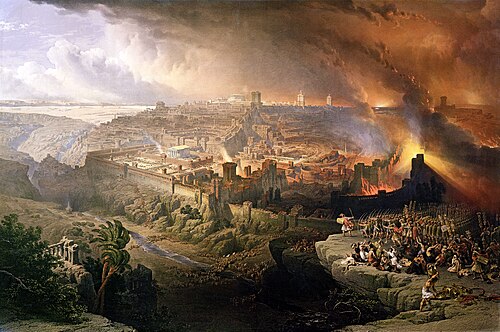
The Siege and Destruction of Jerusalem by the Romans Under the Command of Titus, A.D. 70, by David Roberts (1850), shows the city burning
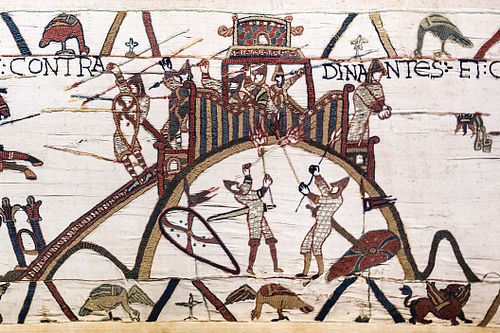
Normans use torches to fire the wooden keep on a motte at Dinan, 1064, Bayeux Tapestry

Chinese fire ships from the Wujing Zongyao military manuscript, 1044, Song dynasty

Two fire arrows (crossbow bolts). Southern Germany, ca. 15th century, with preserved incendiary mixture of saltpeter, charcoal, sulphur and textile on the shaft.
Siege
Videos
A siege is a military blockade of a city, or fortress, with the intent of conquering by attrition, or by well-prepared assault. Siege warfare is a form of constant, low-intensity conflict characterize

Depiction of 70 AD siege of Jerusalem by Francesco Hayez, 1867

The siege of Rancagua during the Chilean War of Independence, painting by Pedro Subercaseaux

Assyrians using siege ladders in a relief of attack on an enemy town during the reign of Tiglath-Pileser III 720–738 BCE from his palace at Kalhu (Nimrud)

The Egyptian siege of Dapur in the 13th century BC, from Ramesseum, Thebes