Elizabethan era
Videos
The Elizabethan era is the epoch in the Tudor period of the history of England during the reign of Queen Elizabeth I. Historians often depict it as the golden age in English history, with an effective


The National Armada memorial in Plymouth using the Britannia image to celebrate the defeat of the Spanish Armada in 1588 (William Charles May, sculptor, 1888)

William Cecil presiding over the Court of Wards

The Spanish Armada fighting the English navy at the Battle of Gravelines in 1588
Robert Dudley, 1st Earl of Leicester was an English statesman and the favourite of Elizabeth I from her accession until his death. He was a suitor for the queen's hand for many years.
Portrait in Waddesdon Manor, c. 1564. In the background are the devices of the Order of Saint Michael and the Order of the Garter; Robert Dudley was a knight of both.


Elizabeth's coronation procession: Dudley is on horseback on the far left, leading the palfrey of honour.
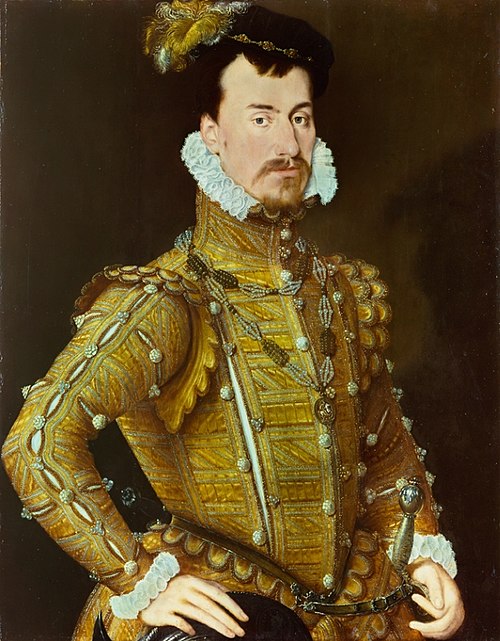
Dudley c. 1560

Lord Leicester. An 18th-century copy of his portrait and autograph