Emperor Sutoku
Videos
Emperor Sutoku was the 75th emperor of Japan, according to the traditional order of succession. Along with Sugawara no Michizane and Taira no Masakado, he is known as one of the "Three Great Onryō of
Portrait from the Tenshi Sekkan Miei, c. 14th century


Mausolem (陵, misasagi) honoring Emperor Sutoku.

Sutoku becoming onryō (vengeful spirit), by Utagawa Yoshitsuya
Taira no Masakado
Videos
Taira no Masakado was a Heian period provincial magnate and samurai based in eastern Japan, notable for leading the first recorded uprising against the central government in Kyōto. Along with Sugawara
Emperor Sutoku
…7, 1119 – September 14, 1164) was the 75th emperor of Japan, according to the traditional order of succession. Along with Sugawara no Michizane and Taira no Masakado, he is known as one of the "Three Great Onryō of Japan". Sutoku's reign in the late Heian period spanned 1123–1142…

Portrait of Masakado formerly kept at Tsukudo Shrine (築土神社) in Chiyoda, Tokyo. The original painting was destroyed in 1945.

Kanmu, 50th emperor of Japan. The branch of the Taira clan (Heishi) to which Masakado belonged, the Kanmu Heishi (桓武平氏), traces itself from Kanmu's children who were not considered eligible for the throne.
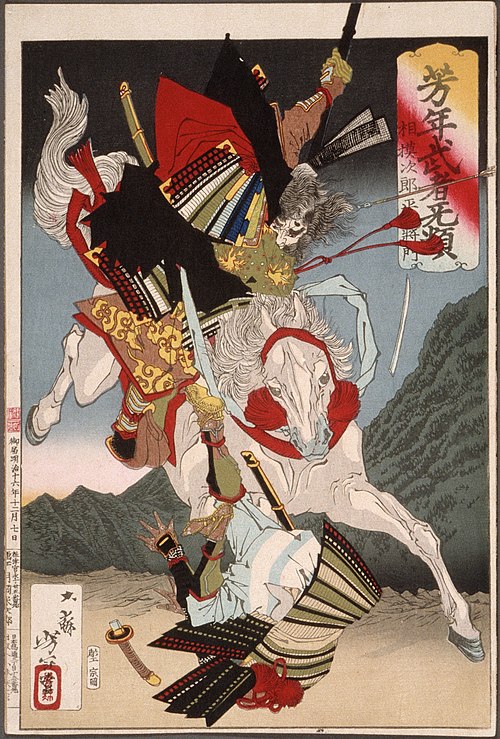
Masakado attacking an opponent on horseback (Yoshitoshi)

Takiyasha-hime, the sorceress, is shown carrying a sword in one hand, a bell in the other, and a torch in her mouth; the toad, her familiar, is shown in the inset with her father, Taira no Masakado. Ukiyo-e woodblock print by Yōshū Chikanobu, 1884.