Eshmunazar II
Videos
Eshmunazar II was the Phoenician king of Sidon. He was the grandson of Eshmunazar I, and a vassal king of the Persian Achaemenid Empire. Eshmunazar II succeeded his father Tabnit I who ruled for a sho

Phoenician-inscribed sarcophagus of King Eshmunazar II from the Sidon royal necropolis, displayed in the Louvre

Achaemenid-inspired bull protome column capital from the Temple of Eshmun, Lebanon

Throne of Astarte at the Temple of Eshmun in Bustan-el-Sheikh in the vicinity of Sidon, Lebanon. The temple by the Ydll source is mentioned in line 17 of the inscription of the sarcophagus of Eshmunazar II.

1892 picture of the sarcophagus lid
Sidon
Videos
Sidon, or Saida, is the third-largest city in Lebanon. It is located on the Mediterranean coast in the South Governorate, of which it is the capital. Tyre, to the south, and the Lebanese capital of Be
Eshmunazar II
…of the goddess Astarte, and his rule saw a strong emphasis on religious activities. He and his mother Amoashtart built temples in various parts of Sidon and its neighboring territories. During his reign, King Cambyses II of Persia rewarded Sidon for its military contributions to his campaign against…

Saida's Sea Castle

Persian style bull protome found in Sidon gives testimony of the Achaemenid rule and influence. Marble, 5th century BC
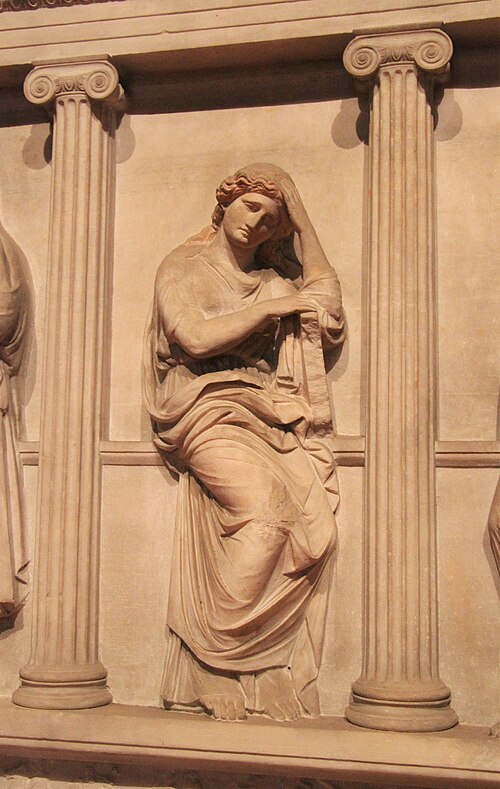
Tomb of the Mourning Women, Hellenistic necropolis of Sidon, now in the Istanbul Archaeology Museums

Sidon Sea Castle, built by the Crusaders in AD 1228