Eurasia
Videos
Eurasia, is the largest continental area on Earth, comprising all of Europe and Asia. According to some models of the world, physio-graphically, Eurasia is a single supercontinent. The concept of Euro

Changes in national boundaries after the collapse of the Eastern Bloc
Europe
Videos
Europe is a continent located entirely in the Northern Hemisphere and mostly in the Eastern Hemisphere. It is bordered by the Arctic Ocean to the north, the Atlantic Ocean to the west, the Mediterrane
Eurasia
…Eurasia ( yoor-AY-zhə, also UK: -shə), is the largest continental area on Earth, comprising all of Europe and Asia. According to some models of the world, physio-graphically, Eurasia is a single supercontinent. The concept of Europe and Asia as distinct…

Depiction of Europa regina ('Queen Europe') in 1582

Paleolithic cave paintings from Lascaux in France (c. 15,000 BCE)
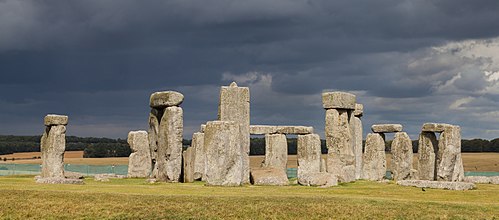
Stonehenge in the United Kingdom (Late Neolithic from 3000 to 2000 BCE)

The Parthenon in Athens (432 BCE)