The era of European and American voyages of scientific exploration followed the Age of Discovery and were inspired by a new confidence in science and reason that arose in the Age of Enlightenment. Mar
Bearing compass (18th century)

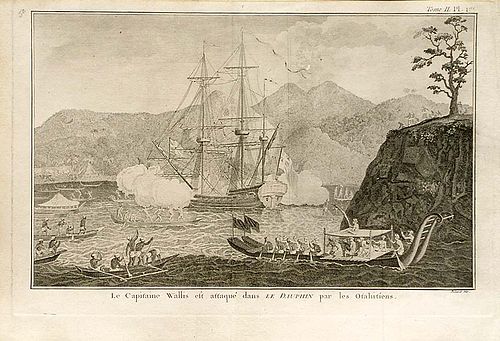
HMS Dolphin at Tahiti in 1767

La Boudeuse arriving in Matavai Bay on the north coast of Tahiti in 1767

HMS Endeavour off the coast of New Holland (ie. Australia), by Samuel Atkins c. 1794
HMS Erebus (1826)
Videos
HMS Erebus was a Hecla-class bomb vessel constructed by the Royal Navy in Pembroke dockyard, Wales, in 1826. The vessel was the second in the Royal Navy named after Erebus, the personification of dark
European and American voyages of scientific exploration
…1810–1893) Publication: V. Wilkes, Narrative of the United States exploring Expedition. (twenty volumes, 1845–1876) 1839–43: HMS Erebus and HMS Terror Erebus and Terror, ships of James Clark Ross. The ships were later lost searching for the Northwest Passage under John Franklin. Terror in the Arctic This…

Erebus in the Ice, 1846, by François Musin

'Erebus' and the 'Terror' in New Zealand, August 1841, by John Wilson Carmichael.

Erebus officers:Top row left to right:Lt. Edward Couch (mate); James Walter Fairholme; Charles Hamilton Osmer (Purser); Charles Frederick Des Voeux [2nd Mate]. 2nd row from top Left to right: Francis Crozier (HMS Terror); Sir John Franklin; James Fitzjames. 3rd row from top left to right: Graham Gore (Commander); Stephen Samuel Stanley (Surgeon); 2nd Lt. Henry Thomas Dundas Le Vesconte. Bottom row left to right: Robert Orme Sergeant [1st mate]; James Reid [Master]; Harry Duncan Goodsir (Assistant Surgeon); Henry Foster Collins (2nd Master), sketches from daguerreotypes by

Model of Erebus trapped in the ice, Nattilik Heritage Centre, Gjoa Haven, September 2019