HMS Erebus was a Hecla-class bomb vessel constructed by the Royal Navy in Pembroke dockyard, Wales, in 1826. The vessel was the second in the Royal Navy named after Erebus, the personification of darkness in Greek mythology.
Erebus in the Ice, 1846, by François Musin
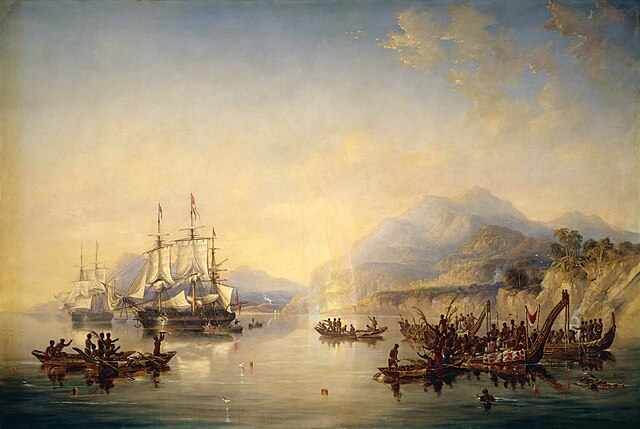
'Erebus' and the 'Terror' in New Zealand, August 1841, by John Wilson Carmichael.
Erebus officers:Top row left to right:Lt. Edward Couch (mate); James Walter Fairholme; Charles Hamilton Osmer (Purser); Charles Frederick Des Voeux [2nd Mate]. 2nd row from top Left to right: Francis Crozier (HMS Terror); Sir John Franklin; James Fitzjames. 3rd row from top left to right: Graham Gore (Commander); Stephen Samuel Stanley (Surgeon); 2nd Lt. Henry Thomas Dundas Le Vesconte. Bottom row left to right: Robert Orme Sergeant [1st mate]; James Reid [Master]; Harry Duncan Goodsir (Assistant Surgeon); Henry Foster Collins (2nd Master), sketches from daguerreotypes by
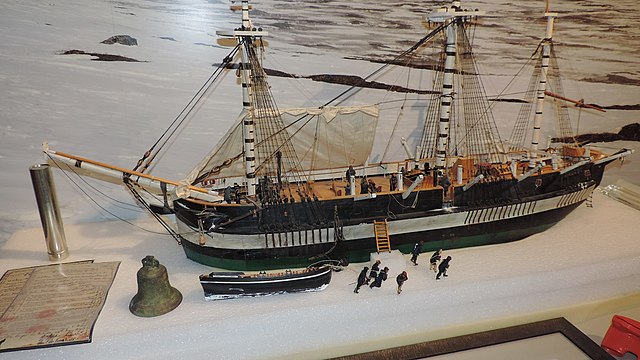
Model of Erebus trapped in the ice, Nattilik Heritage Centre, Gjoa Haven, September 2019
The Hecla class was a class of bomb vessels of the Royal Navy of the early 19th century. They were designed for use as bomb or mortar ships and were very heavily built. Eight ships were launched; all were converted for use as exploration or survey ships. Four ships of the class are known for the role they played in Arctic and Antarctic exploration.
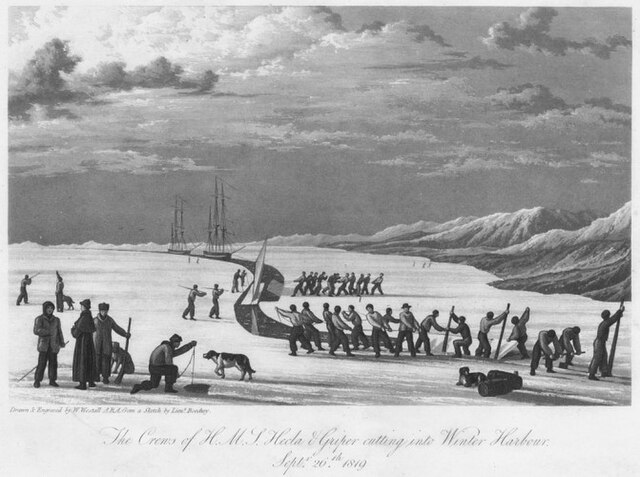
Ships of William Edward Parry's Arctic expedition, HMS Griper and HMS Hecla