Fall of Nineveh
Videos
The Fall of Nineveh, also called the Battle of Nineveh, was a major battle that marked the climax of the Conquest of the Assyrian Empire in 612 BC. After the Assyrian defeat at the Fall of Assur, an a

Painting titled The Fall of Nineveh by John Martin

The "Mask of Sargon of Akkad" (dated circa 2250 BC) was found in 1931 in Nineveh: it was probably mutilated during the destruction of Nineveh by the Medes and Babylonians in 612 BC.
Neo-Babylonian Empire
Videos
The Neo-Babylonian Empire or Second Babylonian Empire, historically known as the Chaldean Empire, was the last polity ruled by monarchs native to ancient Mesopotamia. Beginning with the coronation of
Stele of Nabonidus exhibited in the British Museum. The king is shown praying to the Moon, the Sun and Venus and is depicted as being the closest to the Moon.
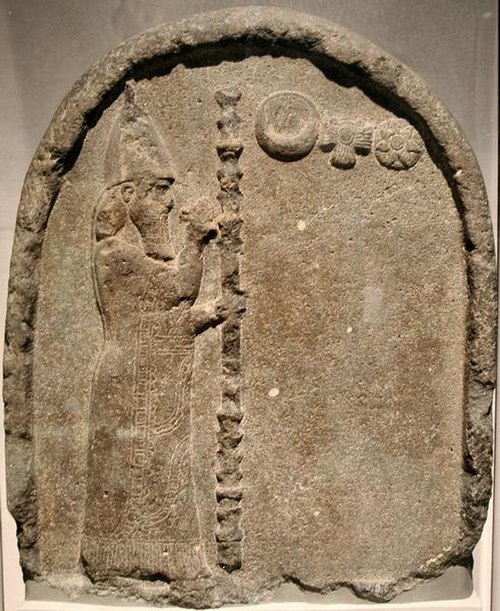

Illustration of the inhabitants of Babylon deriding the Achaemenid king Darius I during the revolt of Nebuchadnezzar III in 522 BC. From the History of Darius the Great (1900) by Jacob Abbott.

Partial view of the ruins of Babylon in modern-day Iraq

9th-century BC depiction from a cylinder seal of the Statue of Marduk, Babylon's patron deity Marduk's main cult image in the city