Fall of Saigon
Videos
Saigon, the capital of South Vietnam, was captured by North Vietnam on 30 April 1975. This caused the evacuation of thousands of civilians and U.S. personnel, and ended the Vietnam War. The aftermath

Situation of South Vietnam before the capture of Saigon (lower right) on 30 April 1975
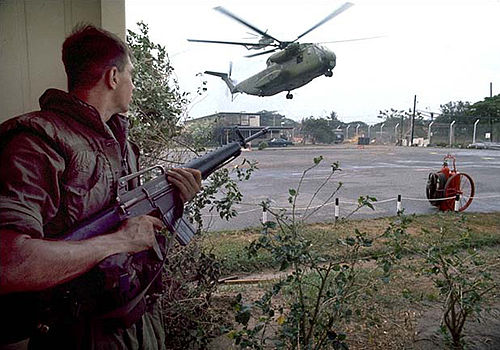
A U.S. Marine holding an M16A1 provides security as American helicopters land at the DAO compound

South Vietnamese refugees arrive on a U.S. Navy vessel during Operation Frequent Wind

The photo by Françoise Demulder showed the two tanks at the gates while tank 390 technically entered first and Lieutenant Bùi Quang Thận was running with the VC flag in his hand
South Vietnam
Videos
The Republic of Vietnam, commonly known as South Vietnam, was a country in Southeast Asia that existed from 1955 to 1975. It first garnered recognition in 1949 as the associated State of Vietnam withi
Fall of Saigon
…Saigon, the capital of South Vietnam, was captured by North Vietnam on 30 April 1975. This caused the evacuation of thousands of civilians and U.S. personnel, and ended the Vietnam War…

Affiche for the 1953 municipal election in Hanoi
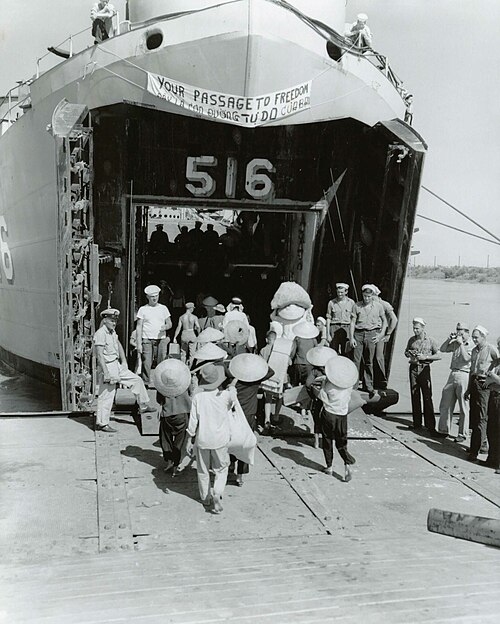
Nearly one million refugees fled communist North Vietnam during the Great Migration.

President Diem welcomed by King Bhumibol Adulyadej of Thailand, Bangkok 1957.

President Diem and US Deputy Secretary of Defense Donald A. Quarles review the honor guard at the Pentagon, Virginia 1957.