Fatimid Caliphate
Videos
The Fatimid Caliphate, also known as the Fatimid Empire, was a caliphate that existed from the tenth to the twelfth centuries CE under the rule of the Fatimids, an Isma'ili Shi'a dynasty. Spanning a l
Fatimid ewer, 10th century CE


Fragments of mosaic pavement from the palace of al-Qa'im in al-Mahdiyya (Mahdia), on display at the Mahdia Museum

Al-Azhar Mosque in Cairo, built by the Fatimids between 970 and 972

Architectural fragment from a bathhouse in al-Fustat, 11th century CE (pre-1168 CE). Museum of Islamic Art, Cairo, 12880.
Ayyubid dynasty
Videos
The Ayyubid dynasty, also known as the Ayyubid Sultanate, was a Sunni Muslim dynasty of Kurdish origin that founded the medieval Sultanate of Egypt, which was established by Saladin in 1171, following
Fatimid Caliphate
…Turks into Syria in the 1070s and the arrival of the Crusaders in the Levant in 1097. In 1171, Saladin abolished the dynasty's rule and founded the Ayyubid dynasty, which incorporated the Levant and Egypt back into the nominal sphere of authority of the Abbasid Caliphate. The Fatimid dynasty claimed descent from…
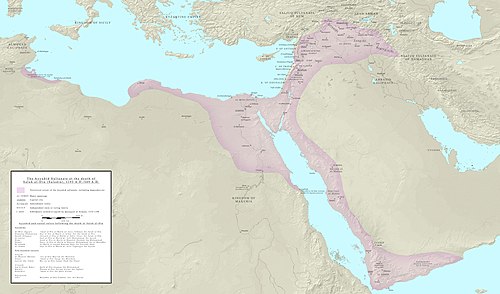
Ayyubid Sultanate of Egypt (in pink) at the death of Saladin in 1193

A dirham in the name of Saladin, dated 587 AH (1190/91 CE). Saladin is shown wearing the Seljuk Turk sharbush hat, his rallying sign. Legend "The Victorious King, Righteousness of the World and the Faith, Yusuf ibn Ayyub".

Fatimid or Ayyubid dynasty battle scene, Fustat, Cairo, Egypt, 12–13th century.

Arabic trebuchet, with its counterweight, in the Tabṣira by Murḍi Ibn cālī Ibn Murḍi al-Ṭarsūsī written for Saladin, late Fāṭimid or early Ayyūbid Egypt, c.1170 CE (Ms. Hunt.264, f.117, Bodleian Library, Oxford, UK). This is the only manuscript directly attributable to the Ayyubids, although early manuscripts such as the Kalīla wa-Dimna (BNF Arabe 3465) are also generally considered as Ayyubid.