Foreign imperialism in China
Videos
During the 19th and 20th centuries, foreign powers practiced imperialism in China through the imposition of unequal treaties, opening of treaty ports, and establishment of foreign concessions and leas
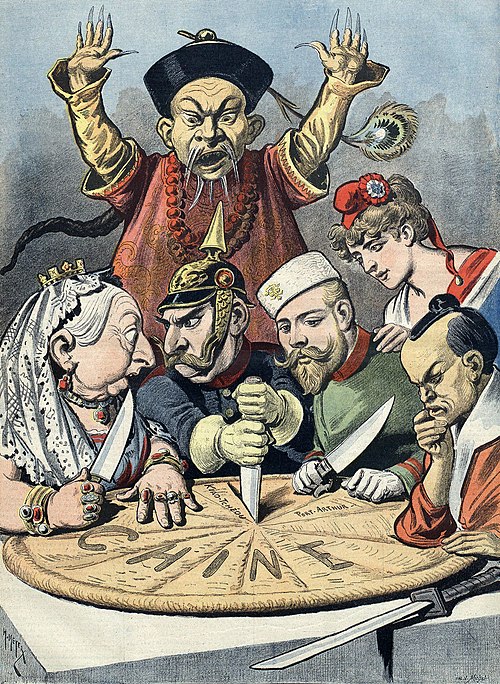
An 1898 French political cartoon depicting Britain, France, Russia, Germany, and Japan dividing China

A painting of the Second Battle of Chuenpi of the First Opium War

A portrait of French minister Marie Melchior Joseph Théodose de Lagrené

The ruins of the Old Summer Palace after being sacked by Anglo–French forces in the Second Opium War.
Open Door Policy
Videos
The Open Door Policy was the United States diplomatic policy established in the late 19th and early 20th century that called for a system of equal trade and investment and to guarantee the territorial
Foreign imperialism in China
…of this process, as major powers carved out exclusive spheres of influence across the country, a trend only partially checked by the United States' Open Door Policy. The foreign presence led to major changes to China's economy and society. Major treaty ports, particularly in Shanghai and Tianjin, became hubs of…

US cartoon from 1899: Uncle Sam (center, representing the United States) demanding Open Door access to trade with China while European powers plan to cut it up for themselves. From left to right: Kaiser Wilhelm II (Germany), King Umberto I (Italy), John Bull (Britain), Tsar Nicholas II (Russia) and President Émile Loubet (France). Emperor Franz Joseph I (Austria) is in the back.

Uncle Sam (United States) rejects force and violence and ask "fair field and no favor," equal opportunity for all trading nations to enter the China market peacefully, which became the Open Door Policy. Editorial cartoon by William A. Rogers in Harper's Magazine (New York) November 18, 1899.

Stepping stone to trade to huge China Market, from Judge March 11, 1900

Mc Kinley