Fossil fuels lobby
Videos
The fossil fuels lobby includes paid representatives of corporations involved in the fossil fuel industry, as well as related industries like chemicals, plastics, aviation and other transportation. Because of their wealth and the importance of energy, transport and chemical industries to local, national and international economies, these lobbies have the capacity and money to attempt to have outsized influence on governmental policy. In particular, the lobbies have been known to obstruct policy related to environmental protection, environmental health and climate action.

Petrol station in Hiroshima, Japan

Placard "Separate oil and state", at the People's Climate March (2017)
Fossil fuel
Videos
A fossil fuel is a hydrocarbon-containing material such as coal, oil, and natural gas, formed naturally in the Earth's crust from the remains of dead plants and animals that is extracted and burned as a fuel. Fossil fuels may be burned to provide heat for use directly, to power engines, or to generate electricity. Some fossil fuels are refined into derivatives such as kerosene, gasoline and propane before burning. The origin of fossil fuels is the anaerobic decomposition of buried dead organisms, containing organic molecules created by photosynthesis. The conversion from these materials to high-carbon fossil fuels typically requires a geological process of millions of years.
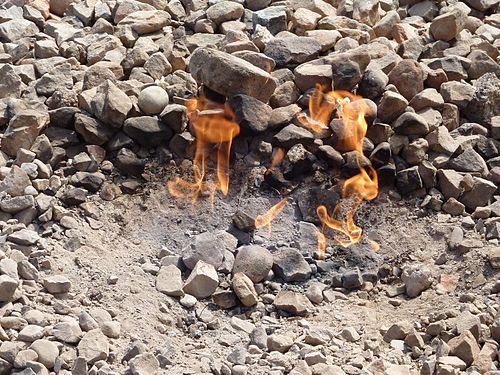
Image: Chuhuo

Image: Petroleum sample

Image: Bituminous Coal