Francis Walsingham
Videos
Sir Francis Walsingham was principal secretary to Queen Elizabeth I of England from 20 December 1573 until his death and is popularly remembered as her "spymaster".
c. 1585 portrait


Ruins of Scadbury Hall, seat of the Walsingham family, Chislehurst, Kent
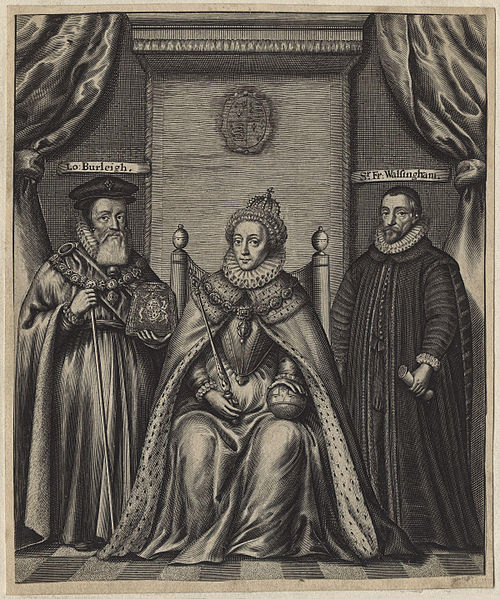
Seventeenth-century engraving of Queen Elizabeth with William Cecil (left) and Francis Walsingham (right)

Famous portrait of Elizabeth I after the defeat of the Spanish Armada
The Saint Bartholomew's Day massacre in 1572 was a targeted group of assassinations and a wave of Catholic mob violence directed against the Huguenots during the French Wars of Religion. Traditionally
Francis Walsingham
…Elizabethan state, overseeing foreign, domestic and religious policy. He served as English ambassador to France in the early 1570s and witnessed the St. Bartholomew's Day massacre. As principal secretary, he supported overseas exploration and colonisation, the development of the English navy and the plantations of Ireland. He…

Painting by François Dubois, a Huguenot painter who fled France after the massacre. Although it is not known whether Dubois witnessed the event, he depicts Admiral Coligny's body hanging out of a window at the rear to the right. To the left rear, Catherine de' Medici is shown emerging from the Louvre Palace to inspect a heap of bodies.

Admiral Gaspard de Coligny, the leader of the Huguenots

Charles IX of France, who was 22 years old in August 1572, by François Clouet.

This popular print by Frans Hogenberg shows the attempted assassination of Coligny at left, his subsequent murder at right, and scenes of the general massacre in the streets.