Franco-Persian alliance
Videos
A Franco-Persian alliance, also known as Franco-Iranian alliance, or the Gardane Mission, was formed for a short period between the French Empire of Napoleon I and Fath Ali Shah of Iran against Russia

The Iranian Envoy Mirza Mohammad-Reza Qazvini meeting with Napoleon I at the Finckenstein Palace, 27 April 1807, to sign the Treaty of Finckenstein. François Mulard.
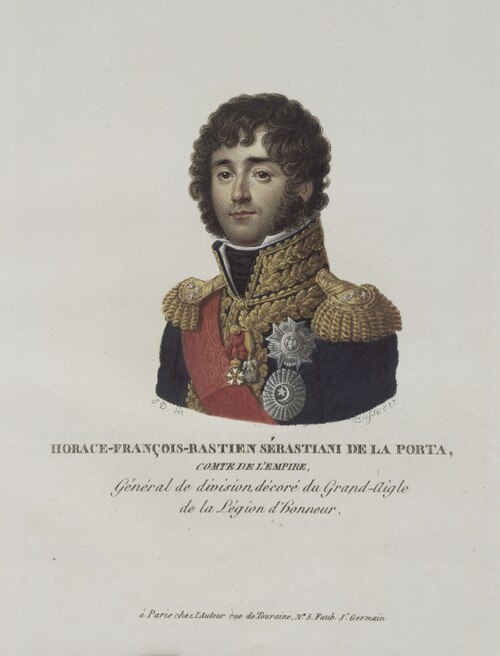
The French General Horace Sebastiani negotiated a Franco-Ottoman alliance with Selim III.

Letter of Fath-Ali Shah to Napoleon I, thanking him for the letter received through M. Jaubert, and asking for military instructors, December 1806.

The Treaty of Finckenstein between Persia and France, ratified 10 May 1807.
Franco-Ottoman alliance
Videos
The Franco-Ottoman alliance or Franco-Turkish alliance was established in 1536 between Francis I, King of France and Suleiman I of the Ottoman Empire. The strategic and sometimes tactical alliance was
Franco-Persian alliance
…and turned its focus to European campaigns. Due to the traditional friendly relations of France with the Ottoman Empire formalized by a long-standing Franco-Ottoman alliance, the relations of France with Iran had long been minimal. Instead, a Habsburg-Persian alliance had developed during the 16th century, and when Persian…

Francis I (left) and Suleiman I (right) initiated the Franco-Ottoman alliance. They never met in person; this is a composite of two separate paintings by Titian, circa 1530.

Ottoman Prince Cem with Pierre d'Aubusson in Bourganeuf, 1483–1489.

First letter from Suleiman to Francis I in February 1526.

Letter of Suleiman the Magnificent to Francis I of France regarding the protection of Christians in his states. September 1528. Archives Nationales, Paris, France